In autumn, despite all the challenges of war, the Travelling Docudays UA Festival — an integral part of the International Human Rights Documentary Film Festival Docudays UA, one of the largest film and human rights events in Eastern Europe — sets off on its journey across Ukraine. Every year, after the large-scale event in Kyiv comes to an end, the festival programme travels to regions across Ukraine to screen documentary films, discuss human rights, and create a space for open conversations about the challenges facing society.
This year, throughout October and November, audiences in at least 19 regions of Ukraine will have the opportunity to see 12 films from the programme of the 23rd Docudays UA Festival, as well as take part in discussions, meetings with filmmakers and protagonists, and other human rights events.
The Travelling Festival programme will reach more than 100 locations — in large and small cities, towns, and communities across Ukraine, from Zaporizhzhia, Kharkiv region, and Kherson to Lviv, Uzhhorod, and Lutsk. This year, 27 leading civil society organisations have joined the festival and are planning screenings and discussions in cinemas, universities, educational hubs, youth and creative spaces, schools, libraries, cultural centres, rehabilitation centres, probation offices, and other venues. Events will take place both offline and online. Where the security situation permits, some will be open to a broad audience, while others will target specific groups, including school and university students.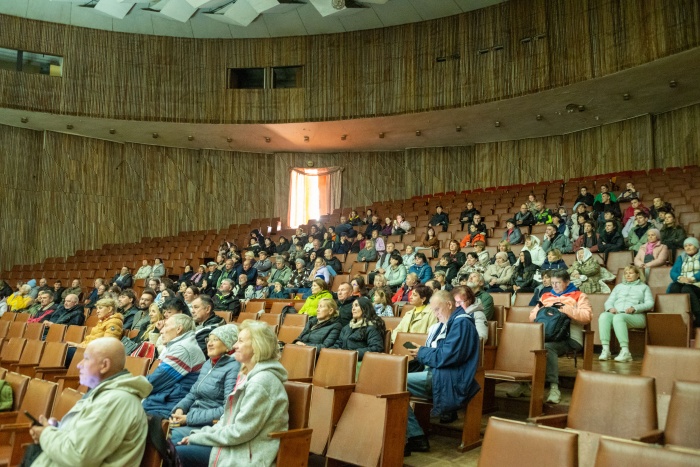
A screening of the Travelling Docudays UA in Kyalnyk, 2025. Photo: Natalia Mykhailenko
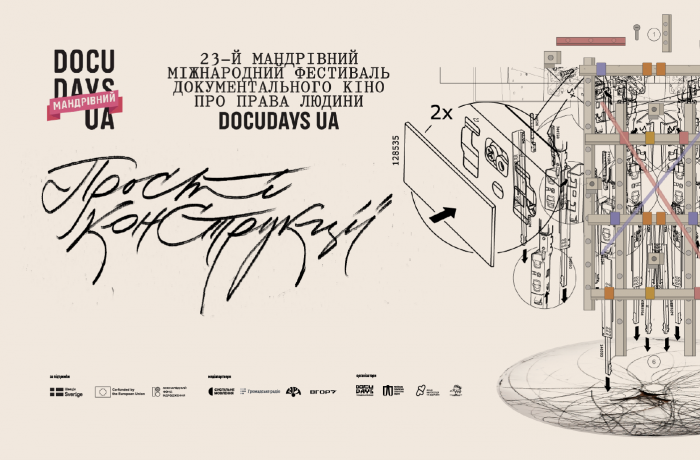
The central theme of this year’s Docudays UA is Simple Structures. This metaphor reflects the realities of life for Ukrainians during the war — temporary, sometimes literally makeshift solutions that become necessary for survival: bricks on gas stoves, autonomous lighting, tents set up in rooms, fishing nets used against drones. But “simple structures” are about more than the practicalities of everyday life. They also speak to people’s ability to adapt, support one another, refuse to remain indifferent, and rebuild their lives time and again amid uncertainty. Through this image, the Travelling Docudays UA invites audiences to talk about resilience, resistance, and mutual support — about what helps an individual withstand adversity and what holds Ukrainian civil society together.
Film Programme
A significant part of this year’s Travelling Festival programme consists of films by Ukrainian filmmakers that explore important themes arising from the realities of war, occupation, and trauma. At the same time, these are powerful statements and inspiring stories of the resilience of the films’ protagonists, their small and great victories on the road to recovery after severe ordeals, and their search for ways to reconnect with themselves.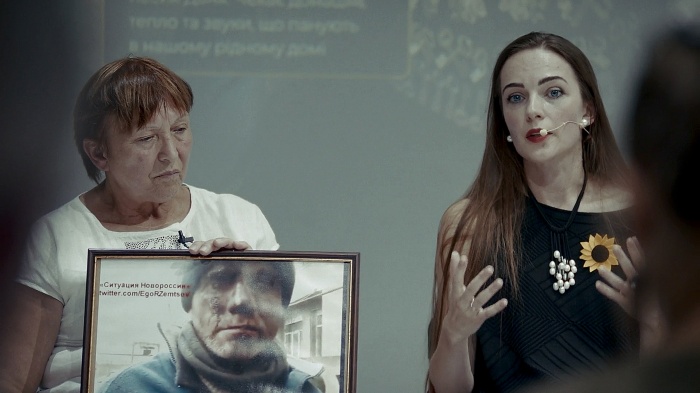
Such is Jeanne Dovhych’s Peace for Nina, the story of a mother whose son, a serviceman and defender of Donetsk Airport, was tortured and executed by pro-Russian collaborators while in captivity in 2015. As she grieves her loss, Nina begins a determined search for the truth about her son’s death in order to establish justice and bring those responsible for the war crime to account. It is a story of a mother’s love, hope, and the small steps towards justice that can become a path to healing.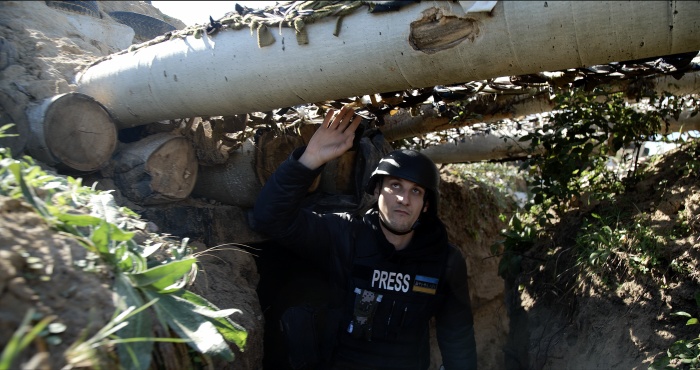
Andriy Lysetskyy’s documentary The Blessed Ones explores a shift in a person’s worldview and principles. The film follows a group of Ukrainian artists who, suddenly finding themselves caught up in a brutal war, undergo a personal transformation and rethink the way they see themselves and the people around them.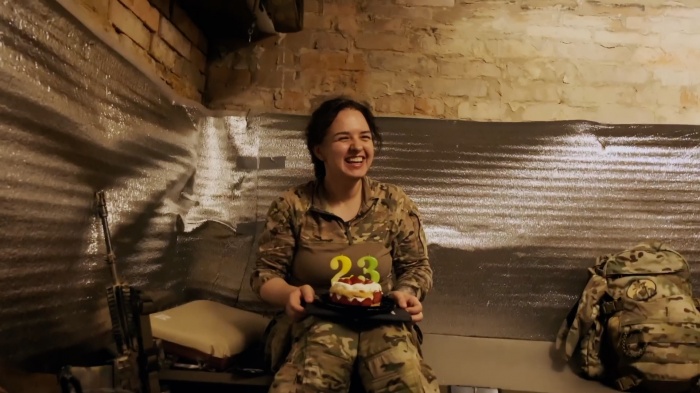
Olga Chernykh’s documentary experiment The Illusion of a Quiet Night becomes a collective portrait of Ukrainian society during the full-scale war. On the night of 27–28 July 2025, 40 cinematographers and hundreds of people in different parts of Ukraine documented their everyday lives — from large cities to northern forests and frontline areas, from temporarily occupied territories to border towns and villages. The footage comes together as a story of a country living between exhaustion and fear, brief moments of joy, and the constant need to hold on.
The themes of war, loss, resilience, and the search for a source of strength also run through a selection of short films.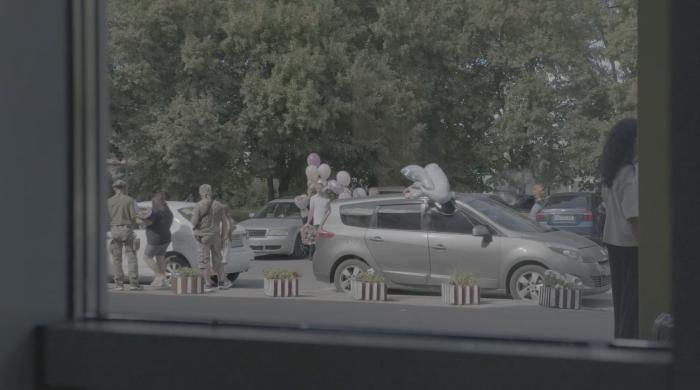
Marina Kronhlevska’s Witnesses. Place of Birth takes viewers to a maternity hospital in Chernihiv at the beginning of the full-scale invasion — a place where life continued even amid war.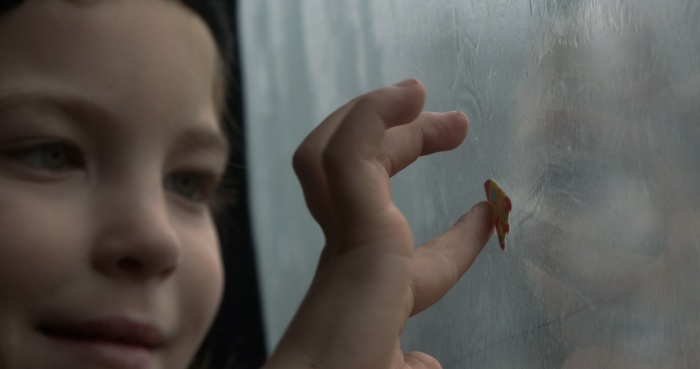
Mykola Nosko’s A Normal Life portrays a mother of many children who evacuates her family from Russian occupation, struggles to keep the family together, and tries to build an ordinary life amid the ruins of a shattered world. But after everything she has endured, a “normal life” no longer means peace or a return to the past. Instead, it means being able to keep living, loving, caring for those close to her, and not losing herself.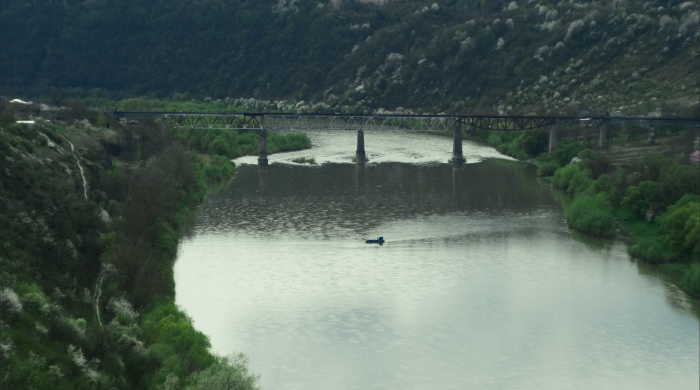
The Ferry Flows by Zhora Papoyan tells the story of a music teacher from Zalishchyky who prepares his brass band for a spring concert against the backdrop of funeral marches that are heard increasingly often in the town.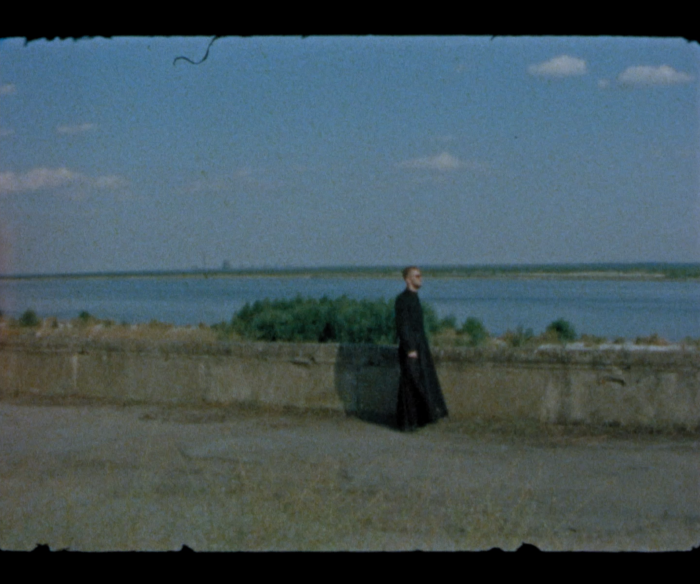
Anastasiya Bonadyha’s Apocalypse Yesterday, Today, Tomorrow and the Day After Tomorrow centres on a man who remains in his hometown of Nikopol despite constant shelling and the threat to his life.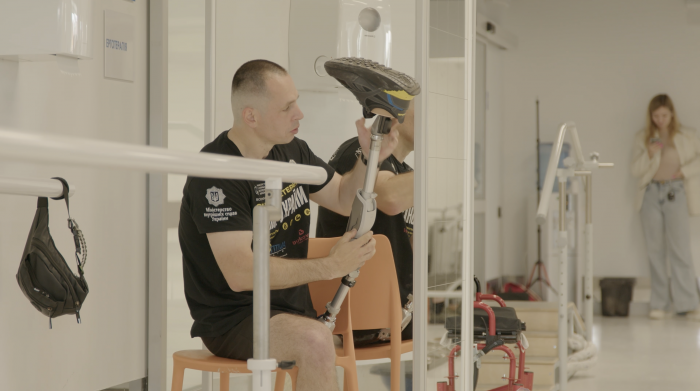
Alla Mitiukova’s Sequela follows a Ukrainian serviceman undergoing rehabilitation after suffering a severe frontline injury as he hopes to return to his loving family and civilian life.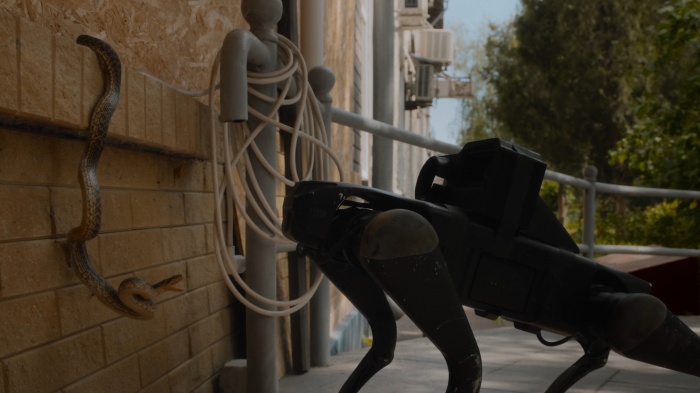
And Homecoming by Roman Khimei and Yarema Malashchuk follows a young man who, after being forced to move from Ukraine to Poland, reconnects with his past and his home through a live video feed from a robotic dog he controls from his room many kilometres away.
The programme also includes two foreign films that explore the experience of colonialism and its impact on societies, memory, and identity.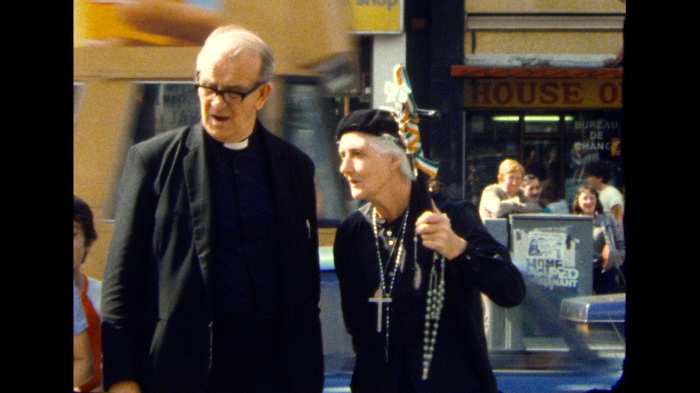
The Swedish-Irish Celtic Utopia, directed by Dennis Harvey and Lars Loven, explores how society rethinks its colonial past through the story of Ireland’s contemporary music scene. Folk music becomes a way of preserving memory, processing trauma, and imagining the future.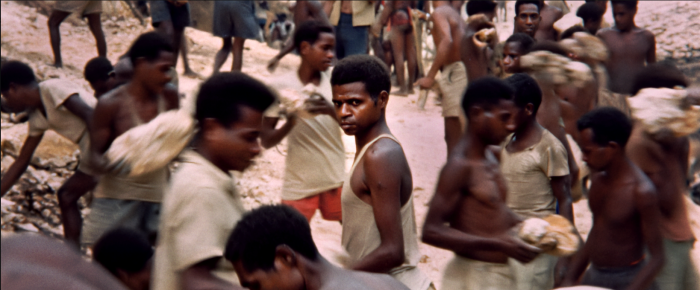
The Promise by Dutch director Daan Veldhuizen tells the story of West Papua, a former Dutch colony that did not achieve independence in the 1960s. The film shows how political and economic interests shape the fate of peoples and prompts viewers to consider how the colonial past continues to influence the present.
The films of the Travelling Docudays UA are not merely an opportunity to watch documentary cinema, but also a chance to engage with topics that are often difficult to talk about: war and trauma, justice and accountability, loss and recovery, resilience and solidarity, the right to remain oneself, and society’s ability to stand together.
That is why the festival’s discussion and human rights programmes are so important. The Travelling Festival screenings become a space for conversations about the experiences we are living through together and about the simple structures — human connections, support, dignity, and responsibility — that help us withstand difficult times.
Human Rights Programme RIGHTS NOW!
One of the recurring themes of the human rights and discussion programme of the 23rd Travelling Festival will be participatory democracy — the ability of people to influence decisions that shape life in their communities, respond to contemporary challenges, support one another, and contribute to shaping a shared future. Amid war and the country’s future recovery, it is particularly important to preserve space for dialogue, trust, and active civic participation. The Travelling Festival is raising this issue for the second year in a row, as people’s voices and engagement are an important part of social resilience and moving forward together.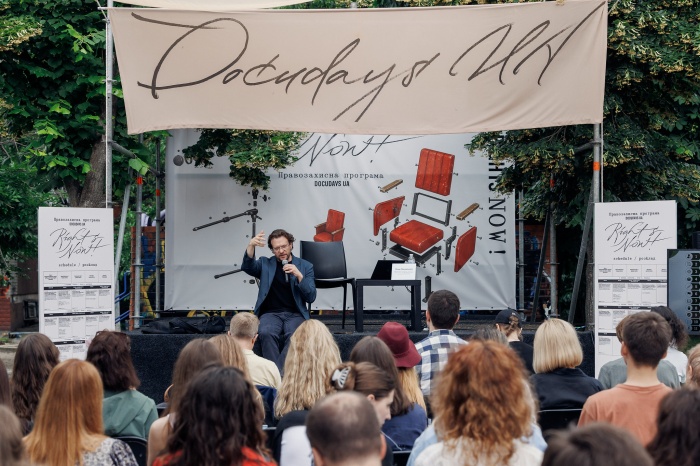
RIGHTS NOW! Lecture featuring Peter Pomerantsev, 2026. Photo: Serhiy Khandusenko
An important part of this year’s Travelling Festival human rights programme will be discussions on decolonisation as one of the keys to understanding the war, Ukrainian history, and how our identity is being shaped today. The festival will feature discussions and author-led lectures designed to help audiences rethink the influence of the imperial and Soviet colonial past on culture, memory, society, and our understanding of ourselves.
This theme — and the 23rd Travelling Docudays UA itself — will open with the online RIGHTS NOW! discussion Seeing What Is Ours: Decolonisation Through Local History and Memory on 1 October at 12:00. The speakers will be historian, PhD, coordinator of the Kharkiv Toponymic Group, and head of a department at the Ukrainian Institute of National Memory Mariya Takhtaulova, and Anton Liahusha, an expert in public history and Academic Director of the Master’s Programme in Memory Studies and Public History at Kyiv School of Economics. The event will be streamed on the Travelling Festival’s Facebook page.
Another important focus of the human rights programme will be events within Being Present, a new information campaign by the NGO “Docudays”, dedicated to Ukrainians living in temporarily occupied territories. We will talk about the rights of people under occupation, the challenges they face, their connection with Ukraine, and the role of the state, media, and society in maintaining that connection.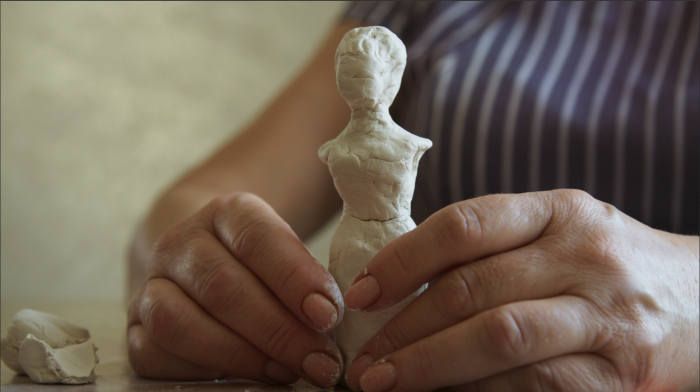
As part of the campaign, audiences will be able to watch Traces by Alisa Kovalenko and Marysia Nikitiuk. The film tells the stories of Ukrainian women who survived sexual violence and torture during Russian aggression. It creates a collective portrait of trauma while leaving room for recovery. Through the strength of solidarity among women standing side by side, the film offers a profound reflection on the possibility of hope amid the devastating traces of war.
Another format of human rights events is the Human Library at the Travelling Festival, which offers an opportunity to talk to “human books” — people with extraordinary experiences, perspectives, and stories they are willing to share with “readers”. The aim of this format is to break down stereotypes, foster empathy, and create a safe space for dialogue.
Accessibility
The Travelling Festival continues to develop its accessibility programme to make high-quality, relevant human rights documentary cinema available to as wide an audience in Ukraine as possible.
Most films in this year’s programme have audio description, which helps viewers with visual impairments better perceive the content of a film, discover additional meanings, and immerse themselves more deeply in its atmosphere. All films also have extended subtitles that convey not only the dialogue of the protagonists but also other important sounds, such as music, footsteps, the rustling of trees, and so on.
Stay up to date with the schedule on the Travelling Docudays UA website, Facebook and Instagram pages, and follow the festival’s regional pages so you don’t miss any important updates.
For more information about the festival and regional events, to discuss partnership opportunities, or to arrange an interview, please contact the Travelling Festival communications department at [email protected].
Festival organisers: the NGO “Docudays”, the Ukrainian Helsinki Human Rights Union, the Charitable Organisation “Mercy and Health Foundation”, and the NGO “Centre for Modern Information Technologies and Visual Arts”.
Media partners: Suspilne Broadcasting, Hromadske Radio, HURT, and Vhoru.
The 23rd Travelling Docudays UA is held with the financial support of the European Union, the Embassy of Sweden in Ukraine, and the International Renaissance Foundation. The views, conclusions, or recommendations expressed herein do not necessarily reflect those of the European Union or the governments and charitable organisations of these countries. The authors bear sole responsibility for the content of this publication.