Throughout the autumn, the Docudays NGO team has been travelling to international festivals and platforms for collaboration and cultural diplomacy. Read a first-person account by Anastasiia Bahalika, Director of the Human Rights Department, who attended this year’s Human Rights Film Festival Inconvenient Films in Lithuania as part of the Doc Around Europe network in a new role and shared her insights into film selection from the perspective of a jury member.
For the first time in many years of working with human rights documentary cinema, I found myself on the other side of the festival process. Not as an organiser, programme curator or discussion moderator, but as a member of an international jury. Lithuania’s Inconvenient Films festival invited me to judge the Impact competition — films vying not only for the audience’s attention but also for a certain degree of social impact. It was my first experience serving on the jury of another international human rights documentary film festival. And it turned out to be interesting for reasons I had not anticipated.
When you spend a long time working within Ukraine’s own bubble, you gradually stop noticing the scale of what you do. You have a programme to put together, dozens of events to prepare, hundreds of people to coordinate with. You have deadlines, budgets, technical problems and an endless stream of decisions to make. What may look from the outside like a major cultural event is, from the inside, made up of thousands of entirely routine tasks.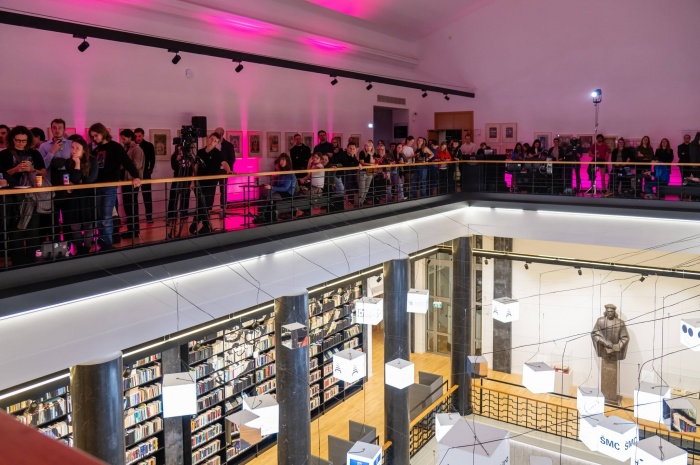
The atmosphere at the opening of Inconvenient Films. Photo from the festival’s Facebook page.
Inconvenient Films gave me the opportunity to see a different approach to organising a human rights film festival. Our Lithuanian colleagues are doing important and meaningful work. They are creating a space for documentary stories that are not always easy to watch and for conversations that society is not always ready to have. And I was incredibly glad to be part of that space.
Anyone who has travelled to international events, meetings and programmes during the full-scale invasion, enduring those endless, exhausting journeys — bus/train, someone else’s airport, someone else’s country, another unfamiliar airport, and then bus/train again — will surely know that sudden, overwhelming feeling of longing that washes over you in the safe quiet of a foreign city. You suddenly feel like an outsider, deeply permeated by the war. Sometimes you even catch people looking at you when you say where you are from. You desperately want to go home. Back to the explosions, back to your people. Perhaps it was precisely by immersing myself in this feeling, by observing another team at work, that I unexpectedly came to realise the scale of what we are doing in Ukraine.
Docudays UA is a major week-long international festival with an extensive programme and a large audience. And we continue to make it happen in the fifth year of the full-scale war. We do not scale the programme back to a token presence, abandon complex formats or turn the festival into a nostalgic reminder of what it was before 2022. We are developing new areas of work, broadening our circle of participants and finding new ways to talk about human rights with people who do not necessarily belong to the human rights community.
When you are immersed in this process, you tend to see first and foremost what has not yet worked. What needs improving, reworking or rethinking for next year. But distance suddenly allows you to see something else: we have built and continue to develop a major cultural and human rights institution under circumstances in which its very existence requires an enormous effort.
This is not a comparison intended to favour one festival over another. Rather, it is an expression of gratitude for the opportunity to look at our own work from a different perspective. And perhaps a little pride, which we seem to allow ourselves all too rarely.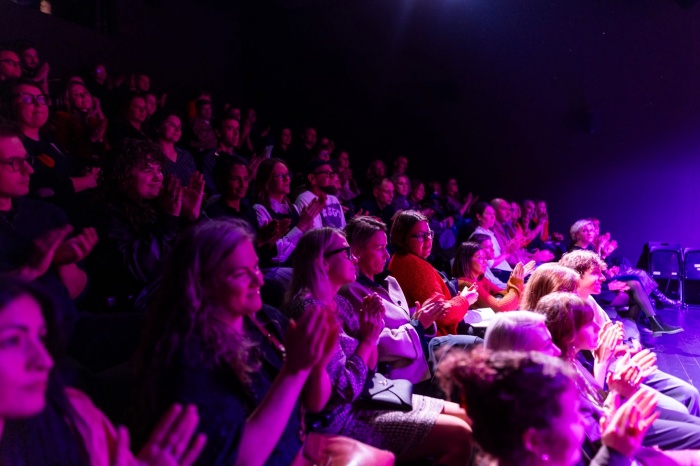
Inconvenient Films audience members. Photo from the festival’s Facebook page.
There were seven films in the Impact competition. They varied greatly in subject matter, cinematic language and their ideas about how documentary cinema can change the world. We often talk about the social impact of documentary filmmaking as though its significance were self-evident. A film draws attention to an issue, makes people whom society overlooks visible, prompts a conversation. But is that enough? Can a film’s potential impact be assessed before it has actually taken place? And does the most important social issue always make for the most powerful documentary?
My favourite in the competition was Menopause Mystery by Louise Unmack Kjeldsen. Spoiler: in the end, the jury did not vote for it.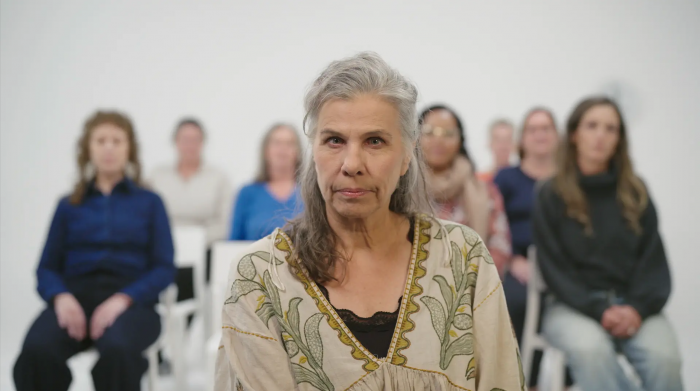
A still from the film Menopause Mystery
At first glance, it was not the most obvious contender for the top prize in a competition featuring films about war, colonialism, freedom of speech and political conflicts. Yet it struck me as the most cohesive. The filmmakers brought together personal experience, scientific knowledge and a broader social issue in a natural way. The film did not oversimplify a complex subject, nor did it try to artificially inflate its significance. It seemed to have a very clear understanding of why it existed, whom it was addressing and what exactly it wanted to change. To me, this is an important quality of documentary cinema that aspires to make an impact. It is not the scale of the problem itself that matters, but the precision of the statement and the ability to turn the viewer’s attention into something more.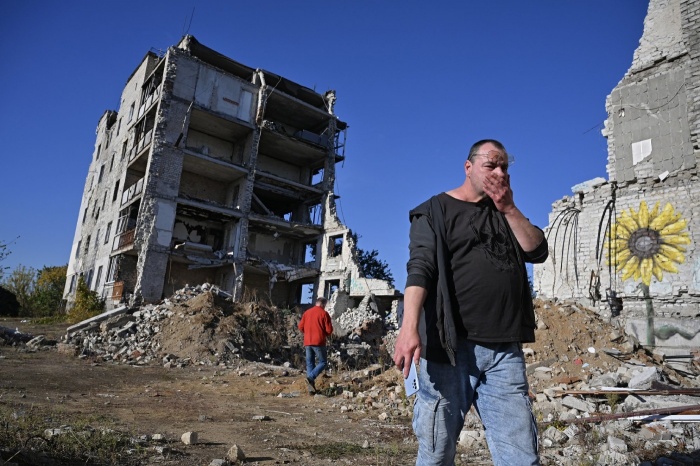
A still from the film Change My Mind
Another film in the competition, Change My Mind by Robin Kvapil, offered an almost opposite experience. The filmmaker sets up an experiment that, essentially, fails to achieve its stated goal: the protagonists do not change their beliefs. But it is precisely this failure that makes the film interesting. The director has a position of his own, yet he does not try to force the audience to share it. He creates situations in which the protagonists can reveal themselves and leaves us free to draw our own conclusions. I find this approach compelling. Documentary filmmaking does not necessarily have to persuade. Sometimes its greatest value lies in allowing us to encounter something we disagree with without being handed a ready-made instruction on how to feel about it.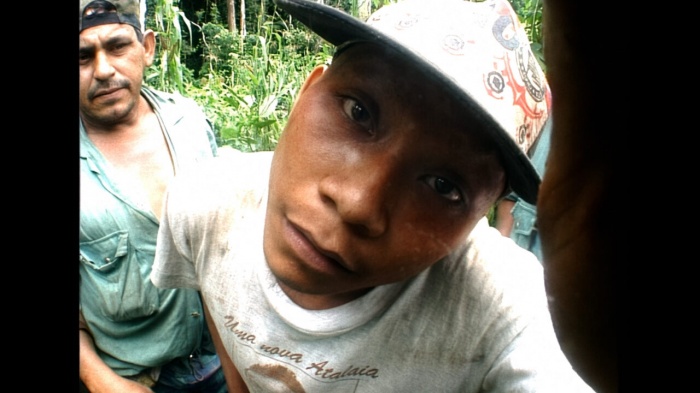
A still from the film Amazomania
The film that left me with the most questions was Amazomania by Nathan Grossman. It revisits the history of an ethnographic expedition to the Amazon and the colonial lens through which researchers once viewed Indigenous peoples. Halfway through the film, the filmmakers radically shift the perspective: now the person who once observed others becomes the object of observation and scrutiny. It is a powerful idea. But the way it is executed made me deeply uncomfortable. The elderly ethnographer Erling is brought back to the Amazon many years after his research there. Gradually, however, you get the sense that the filmmakers are not simply inviting him to confront his past; they expect him to arrive at a very specific moral conclusion. As though he must recognise his own wrongdoing in precisely the way they understand it.
But does this situation not reproduce the very power structure that the film seeks to criticise? Does an anti-colonial perspective not become yet another way of judging another person exclusively by one's own moral standards? I discussed this at length with my fellow jury member, Kathleen Fournier. The protagonist reminded her of her father, and she recognised a closely related issue in the film. I was particularly struck by how different personal and professional experiences can lead people to similar conclusions.
We decided to give Amazomania a special mention. Not because the film resolves all the questions it raises. Quite the opposite: because it leaves the viewer grappling with difficult contradictions, including questions about the filmmakers’ own ethics. To me, this is one of the competition’s most interesting paradoxes: a film can be ethically uncomfortable and, at the same time, enormously valuable as an invitation to critical reflection.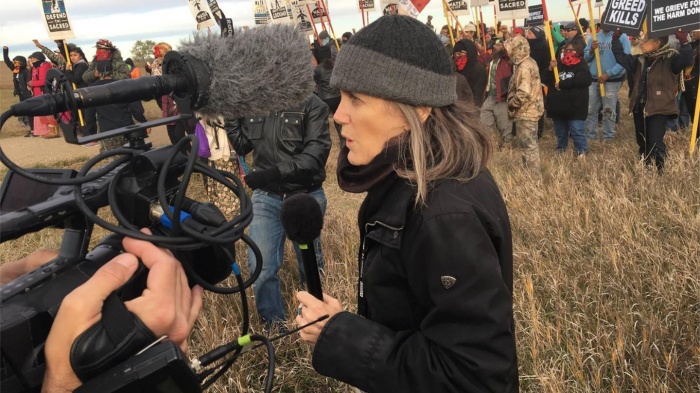
A still from the film Steal This Story, Please!
The jury ultimately awarded the top prize to Carl Deal and Tia Lession, a film Steal This Story, Please! about American journalist Amy Goodman. The decision was the result of extensive discussion and compromise. I personally had some substantial reservations about the film. Above all, I felt there was not enough critical distance between the filmmakers and their protagonist. Much of the film is built around their admiration for Goodman, her principles, courage and professional consistency. But when documentary filmmakers love their subject so much, there is a risk that, instead of an investigation, we end up with a tribute.
At the same time, towards the end, the film revealed a far more interesting Goodman than the one the filmmakers had presented at the beginning. This was particularly true of the episodes concerning Israel and Gaza. Goodman speaks about her Jewish heritage and criticises the actions of the Israeli government, while also asking difficult questions about Hamas’s crimes, the events of 7 October, the hostages and the people who survived the attack. Her identity does not diminish her professional complexity. And that complexity does not diminish her identity. This is perhaps what I appreciated most about her as a person.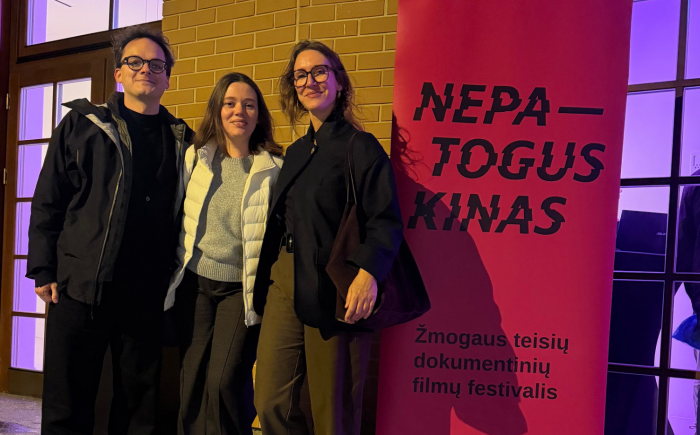
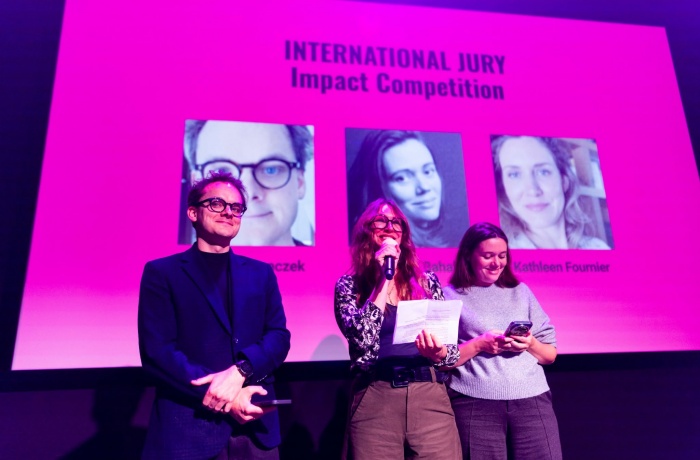
The Impact competition jury: Tadeusz Strączek, Anastasiia Bahalika, and Kathleen Fournier. Photo courtesy of Anastasiia Bahalika.
An international jury is more than just a group of people watching the same films and choosing a winner. It is a meeting of different lived experiences, each shaping what we see on screen. I became acutely aware that my Ukrainian perspective — the experience of a journalist working during wartime and of someone involved in human rights work — allows me to notice things that may not be immediately apparent to colleagues from other countries. This does not make my perspective universal or infallible. But it brings something to the conversation that might otherwise be missing.
We often talk about the need for Ukrainian voices to be present in international discussions. Sometimes this sounds as though our main task is to tell the world about the war and draw attention to the Ukrainian experience. But our experience matters for more than just being an object of others’ sympathy or solidarity. It gives us our own intellectual tools for discussing democracy, colonialism, freedom of speech, the state, violence and human rights. We can do more than tell our own stories. We can ask uncomfortable questions about other people's. Perhaps this was one of the most important things I discovered at the festival.
Main photo: Award ceremony for the winning films of the Impact competition. Photo from the Inconvenient Films festival Facebook page.