With the films which we have selected for the EQUALITY SYNDROME programme, we want to overcome the indifference towards people with physical disabilities, especially those who were born with Down syndrome or who have mental disorders. PR director Darya Averchenko tells about festival's special screenings.
Once, I used to work in television, and I got the chance to interview a manager of a Schoolchild’s Room. He taught children to make wooden toys and he really loved his job. Maksym moved around in a wheelchair, lived in the Pozniaky district and went to work in the Minsky neighborhood. Maksym’s high-rise building had a good supervisor. He made a nice ramp to make it easier for people in wheelchairs, mothers with baby carriages and old ladies with shopping carts to get home and go out. But outside, Maksym faced obstacles and challenges: the stairs leading to the subway station, the platform where Maksym had to ask the subway workers’ help to get into a train car, to transfer to another line, exit from the subway. Then it took him a long time to ride along the sidewalk, with all the cars parked on it, in order to get to his workplace. He talked about how it was not customary to talk about people with disabilities in Soviet times: they were housed in special buildings and their integration in social life was not welcome. A person with disabilities could have spent all their life at home, and nobody cared about their strivings, talents, or intellectual capacities.
I don’t know if anyone was affected by my news story back then, but I know for sure that Maksym’s story changed me forever. Now, when I see a person in a wheelchair, I stop and offer them help. And in general, I respond to all forms of difference with a desire to support the person.
With the films which we have selected for the EQUALITY SYNDROME programme, we want to overcome the indifference towards people with physical disabilities, especially those who were born with Down syndrome or who have mental disorders.
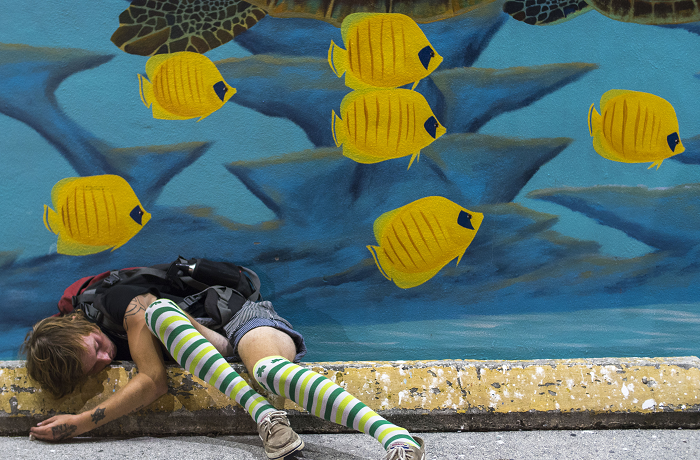
In the film I Am Another You the director makes an experiment: she asks the friends of her protagonist, Dylan, to come together in the same room and read different books out loud. And at the same time, Dylan must focus on drawing discriminants on the board in the middle of the room. “This is what actually happens in my head every day,” the guy explains. His mental illness pushes him out of the house and separates him from his family, who are unable to understand him. Dylan is forced to live in the streets.
The film Michail and Daniel is a moving story about how an artist father takes care of his deaf son with cerebral palsy. In order to treat the boy and integrate him fully into life, Michail moves from Ukraine to the Czech Republic. The treatment gives wonderful results: Daniel grows up completely independent, likes football and dancing with girls. And it turns out he’s also an artist! Overcoming pain, with clumsy movements, he crafts jewelry from colored glass.
There is probably nothing more desirable than to have your own family understand that you are one of them, that you are old enough to make your own decisions and build your own life. The Grown-Ups is about people with Down syndrome who work at a school kitchen. The film’s protagonists are already forty years old, they are in love and want to live together. But their custodians have their own opinions about how they should build their lives. This love story is sad and optimistic at the same time because being happy against all the odds is possible when you love and when you are loved.
Text: Darya Averchenko
Header photo: "I Am Another You" by Nanfu Wang