Continuing expedition through international festivals, Selection Committee member and Director of the Communications Department at Docudays NGO, Darya Averchenko, visited Porto/Post/Doc in Portugal. This year, Ukraine was represented by a single film — Militantropos by Yelizaveta Smith, Alina Gorlova, and Simon Mozhovyi, while the programme also featured a film of Russian propaganda. Read on to learn how the dialogue on memory and (non)modernity unfolds and what opportunities may open up here for Ukrainian filmmakers.
Why do festival-goers head to Porto/Post/Doc?
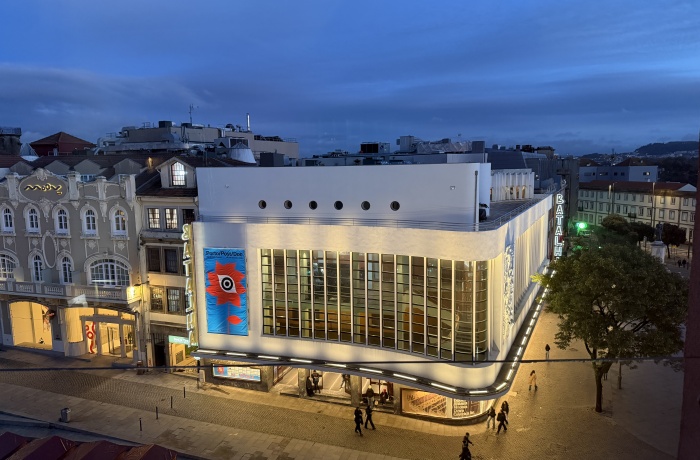
The Porto/Post/Doc documentary film festival is held every year in late November and lasts 10 days. As a rule, festival-goers come here straight from IDFA. You can meet selectors from the Berlinale and other respected platforms that focus on regional documentary cinema, hybrid films, and low-budget fiction. The festival spans six venues, including a planetarium and a theatre. But the main one is a local art-deco film centre built in the early 20th century with impressive ambition. It houses two spacious screening halls, a library-coworking space, a small cinema-themed exhibition centre, a specialty store, and a casual ceremony stage with a bar opposite it, where you can immediately toast the winner.
“Portuguese people have taste,” you think, settling into one of the seats. But, to jump ahead, I’ll admit that in four days of industry screenings, I learned disappointingly little about contemporary Portugal. Local directors’ attention is focused on former Portuguese colonies. For instance, I learned every detail of the civil war in Mozambique and watched a very long film about an 80-year-old batuku performer [ed. note: musical and dance genre] from Cabo Verde who tours African communities of the Lusophone world. When the Spanish films began, I braced myself for something that speaks to the here and now. But the last hope of seeing a contemporary regional doc evaporated quickly: either they’ve run out of topics or Spain’s film funding bodies are eager to support only excavations of the past. Because once you start dealing with the present, you might run into criticism.
One Spanish hybrid centred on WWII, specifically Alicante under Franco’s occupation. The protagonist — a historian and a rather poor actress — approaches people on the street, asking them to read archived letters from prisoners. And that would be fine, except every Spanish film I saw involved reading letters, postcards, and notes on photos as if no other cinematic language exists. “Are you serious?” I groaned by the end of day three in the screening hall, and went for a walk.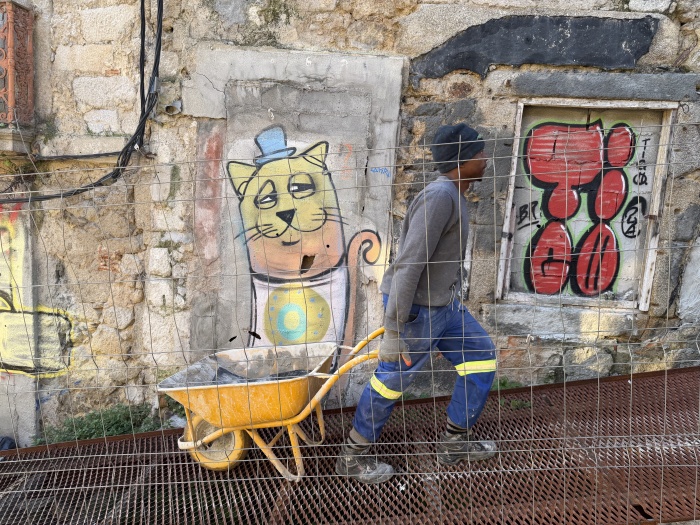
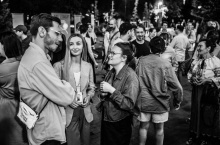
Documenting the city. Photo: Darya Averchenko
I should say that the streets of Porto were full of Black migrants sweeping, washing, and pushing wheelbarrows of cement. These, in fact, are the realities of modern Portugal: local filmmakers atone for the former imperial policy by lovingly portraying life in Mozambique, Guinea-Bissau, Angola, Cabo Verde, São Tomé and Príncipe. Meanwhile, back home, another film plays out: a Black crew pouring cement into a mixer shouts after me, “Hey, babe! What’s the plan for tonight? Answer me, I’m poor but have my dignity!”
Can one beat the local agenda?
Perhaps out of sympathy for migrants, the Porto/Post/Doc team created an excellent scholarship called “Working Class Hero.” Under its conditions, a director spends a month in Porto, finds a protagonist from the working class, and shoots a trailer. The three selected fellows are chosen personally by Festival Director Dario Oliveira. He offers each of them €1.5k and even a guest room in his home. At the festival itself, all three researchers present their ideas and teasers at a pitching session. The jury picks a winner, who receives €75,000 — enough to produce a short film. In a private conversation, Dario complained that European filmmakers turn their noses up at his offer, saying it’s not enough — whether time or money. I told him that most Ukrainian documentarians would highly appreciate such a residency: a chance to step away from wartime realities and breathe some ocean air. Dario happily promised to send invitations to Kyiv addresses.
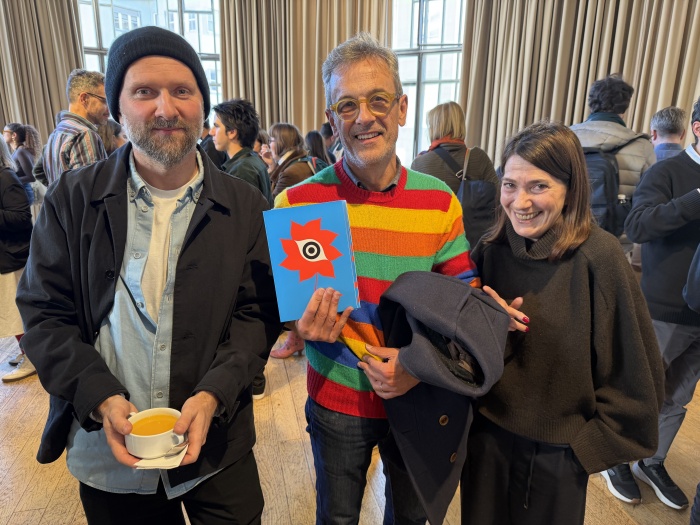
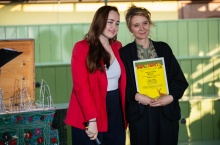
Romanian director Vlad Petri, Porto/Post/Doc Festival Director Dario Oliveira and FIPADOC General Artistic Director Christine Camdessus. Photo: Darya Averchenko
But coming to a creative residency is one thing; winning the pitching prize is another. And the hardest part, as I observed, is overcoming the local agenda. We saw three very different projects: a film by Portuguese director Pedro Neves about a tattooed working-class district barely making ends meet, held together by a community that keeps them from slipping all the way down. A project by Romanian director Vlad Petri about tourism-sector workers who keep Porto from letting the reins go and turning back into the neglected city it was 20 years ago. And… a project by Spanish documentarian Elena López Riera about a grave caretaker at the central cemetery who washes statues of the Virgin and angels and enthusiastically talks about the love story of Henry and Antoinette buried here a few centuries ago. Guess who won? I swear the film will contain plenty of recited correspondence between those two historical figures — but I can’t promise it’ll be interesting. In short, I strongly disagree with the decision to award this project.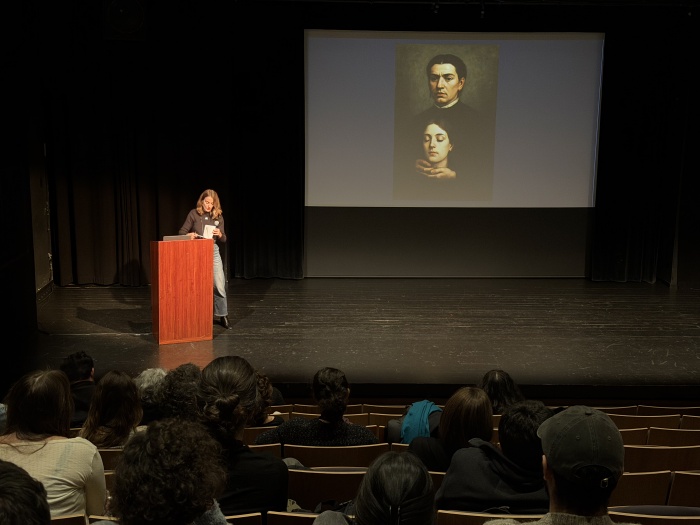
Pitching a project by Spanish documentary filmmaker Elena López Riera. Photo: Darya Averchenko
And what about the Kremlin stooges?
Naturally, at every festival I check for Russian propaganda. Finding Russian films in a programme is painful, and now they even mask themselves as, say, Serbian. For example, I found Short Summer by Nastia Korkia with a poetic synopsis. I smelled the Russian vibe immediately and went to check.
The prologue: an 8-year-old girl travels with her grandparents to their dacha, sticking a piece of glass out of the car window to catch a sunbeam (I’d love to see a kid do that in 2025, when all kids have phones). Finally, their car reaches a checkpoint. Two boys, about seven years old, say the village is under an anti-terrorist operation and ask them to open the hood. The grandfather pours coins over it to buy their way through.
Then comes the classic “Russian village”: a wooden hut, a dead beetle on the windowsill, smoke from a bonfire, old men drinking outside the shop. Then a man in a blue coat strangles a dacha owner. (Later we learn he has PTSD from the Chechen war. Thank God not from the one in Ukraine.) Russian fighter jets fly overhead, trains carrying tanks roll by. A grandmother switches off Putin’s speech — a symbol of “silent protest.”
And to my shock — this student film wins the grand prix. Naturally, I didn’t stay silent: I explained to the programmers that such a film is harmful because it portrays Russians as supposedly uninvolved, when over 80% of Russia’s population supports their dictator and is ready to fight until the last Ukrainian.
Another episode outraged me just as much. At a party, one of the guests of honour, Andriy Ulitsa whose retrospective screened this year dragged my colleague, Marharyta Kulichova, into a public debate: “Whose Crimea?”
Accusations of nationalism, claims about “Ukraine invented by Lenin,” denial of our culture — he hurled all of this at her. No one nearby dared intervene.
Festival leadership learned about the incident quickly and promised to take action and strengthen Ukrainian representation next year. I hope they also spoke with Andriy Ulitsa, who, despite making films about the cruel dictator Ceaușescu, apparently never managed to decommunise himself.
And finally, about festival trends…
After all these adventures, we finally heard from the festival director that he knows far less about the Ukrainian war than about the Palestinian one. This year’s featured guest was Lina Salem, a director and actor of Palestinian descent.
She was born in Paris, but her career grew out of film explorations of her family stories in Palestine and Algeria. During the festival, Lina appeared on the main stages and even managed to visit students of the local university. By the way, it’s genuinely cool that Porto/Post/Doc has close cooperation with the local Catholic University and hosts annual meetings between artists and students.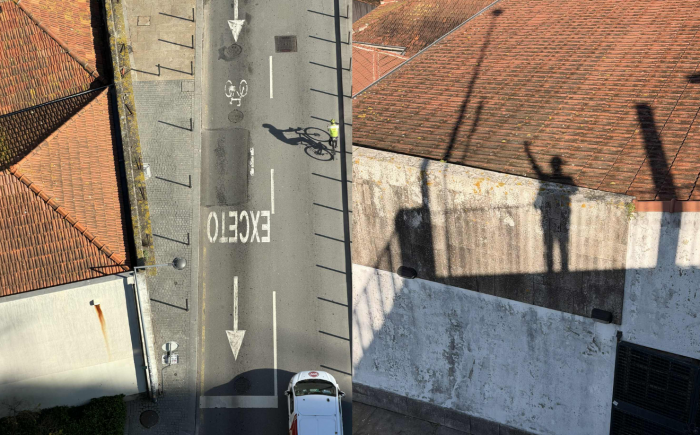
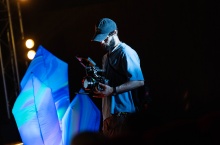
The paths, the lines and the shadows of Porto's streets. Photo: Darya Averchenko
Her films were probably the ones that told me the most about the beauty and people of Palestine. At the same time, I couldn’t shake the feeling that festivals today are ruled by the agenda of “trending wars.” The next trending war, they predict, will be one between India and Pakistan. The tendency of transforming festival platforms into media relay points is honestly frightening. And though no war in this world can be stopped by art alone, I sincerely want to see a desire to understand, reflect, and support those in trouble.
Main photo: Batalha Centro de Cinema, where Porto/Post/Doc was held. Darya Averchenko