Oleksandr Dovzhenko National Centre and Oleksiy Radynsky, together with Docudays UA, present.
The process of ‘perestroika’ before the disintegration of the USSR and the first years of independence were unique in the history of Ukrainian documentary film. The gradual lifting of censorship in this area gave birth to a wave of critical film journalism.
Ukrainian documentary film, which through most of itshistory had been forced to carry out propaganda functions and serve ideological orders, now turned into an effective tool for social criticism. Documentaries were still quite often shown incinemas before the main feature, but instead of ritual reports about the accomplishments of the ‘people’s economy’, viewers saw sharp and gradually increasingly radical criticism of the current state of affairs. Documentary filmmakers were turning more and more often to such topics as the inefficiency of the Soviet state system, the lives of excluded categories of people in the USSR, the Chernobyl catastrophe, the Great Famine (Holodomor), and mass democratic movements.
Now that the ideas of ‘perestroika’ and ‘glasnost’ were official policy, a paradoxical situation occurred: the criticism of the Soviet system, that was becoming harsher every day, was being created within the Soviet system of film production itself. In effect, a democratic public sphere was being created in the form of public mass media, financed by the state and aimed at an open criticism of the social problems. This model didn’t live long though: together with the collapse of the USSR, the demand for criticism of the newly created state system in the form of documentaries, film chronicles and film journalism practically disappeared.
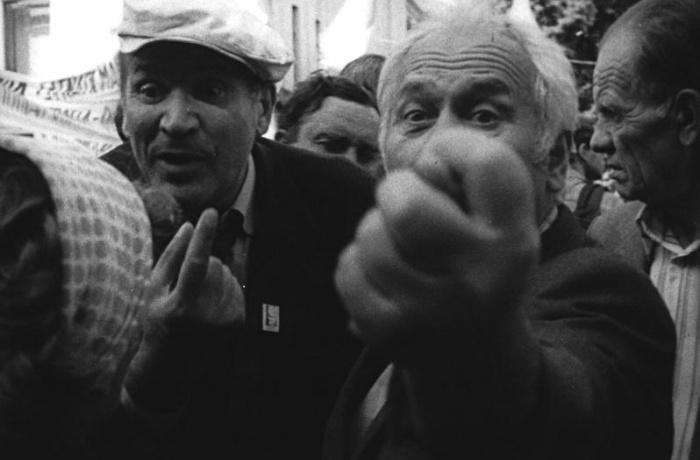
By canceling state support of documentary and chronicle film production, the Ukrainian authorities virtually deprived the people of a democratic tool for influencing and controlling political and social processes in the country. In the middle of the 1990s, production of non-fiction films practically ceased in Ukraine. This process is documented in Israel Goldstein’s film A Farewell to Cinema, whichgave its name to the entire program of Ukrainian critical documentary film.
March 24, 2 pm, Cinema House, Blue Hall.
Oleksiy Radynsky,
media activist,film critic, editor of Political Critique (Ukrainian edition)