Five powerful documentaries shape this year’s DOCU/UKRAINE national competition. Discover how they reflect the continuity of Ukrainian documentary practice and the pressing questions they raise in the curatorial piece by Docudays UA Programme Director, Yulia Kovalenko.
It seemed that last year’s Docudays UA national competition films had already assembled into a striking puzzle, evoking thoughts of a dynamic surge in new Ukrainian cinema. Yet once more, DOCU/UKRAINE proves: whether named a “wave” or a “movement”, Ukrainian documentary is forging a phenomenon unlike any other on the world’s cinematic landscape.
The directors of these films continue to search for images and forms that allow them, as if through a cinematic magnifying glass, to examine more deeply the reality in which we now live in Ukraine. As one of my friends aptly observed, Ukrainian documentarians seem constantly driven to create cinema that can most fully convey the experience of living in wartime – even to those who neither watch the news nor scroll through social media feeds. These films continue to speak to Ukrainian audiences, at times confronting them with difficult but vital questions.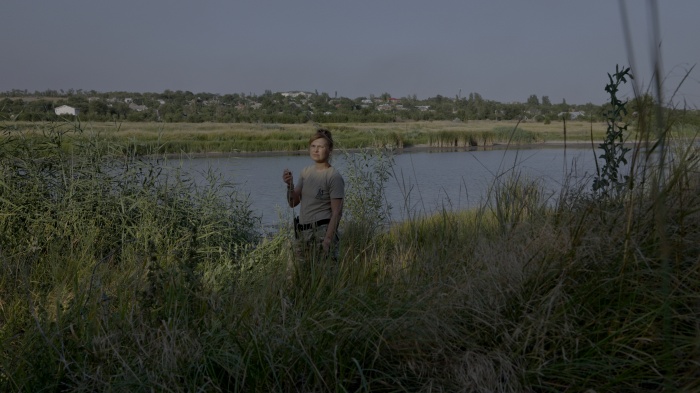
A still from the film Don’t Ask Me If I Killed
These questions may not always yield immediate answers, yet to keep them within our orbit is already to hold an essential moral compass. What remains of the human soul when it is forced to endure the loss of loved ones and, at the same time, harden itself to destroy the enemy responsible for that pain? Or rather, where can one shelter this fragile anima – full of warmth and delicate attunements – from the storm of relentless trials? Don’t Ask Me If I Killed by Helena Maksyom, whose world premiere takes place at Docudays UA, does not offer a universal answer – nor could one exist. Yet this filmmaker’s diary, written by a director who has taken up arms, becomes a rare space where such questions can be asked and find their resonance.
With tenderness and profound empathy, Helena observes through her lens herself, her mother, and her brothers‑ and sisters‑in‑arms, carried along by the relentless passage of time. A difficult exchange with her mother about enlisting; the drills; the evening calls between comrades and their families that break the heart; the anniversary of the full‑scale invasion; the repeated conversations with her mother about her health; the new military rank; the losses, losses, losses – and the grief. All this in place of living in peace, raising families, caring for parents, building civilian careers, and a bright future of open horizons. No soul can endure such a storm without seeking shelter. The filmmaker discovers such havens in conversations with comrades and in brief moments when she turns the lens upon herself. 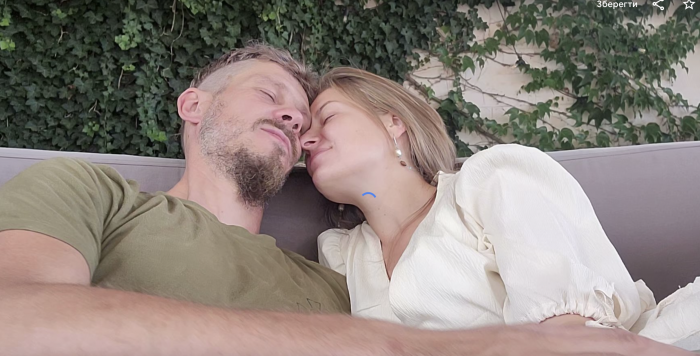
A still from the film Where Everything Disappears
Another diary shot with a rifle by his side – Where Everything Disappears by Oleksandr Tkachenko, which premiered in the international competition at the FIPADOC Festival in France in 2026. The footage comes from Dmytro Dokunov, a cinematographer and soldier. His smartphone camera becomes his companion in confronting fundamental questions from the moment of mobilisation. A lifelong pacifist, who until 2022 lived harmoniously with nature in a small Odesa village community, Dmytro is forced to rethink defence and the meaning of violence after Russia’s full‑scale invasion of Ukraine. What is love in times of violence? How does one live with responsibility for comrades as well as oneself? And how can one keep the ability to love after standing in the heart of darkness, where every shot makes everything disappear? 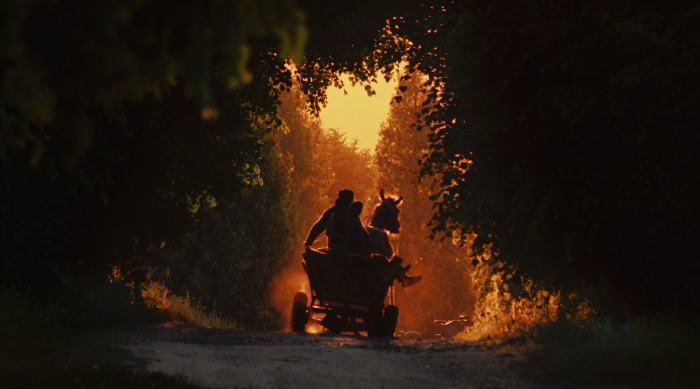
A still from the film Silent Flood
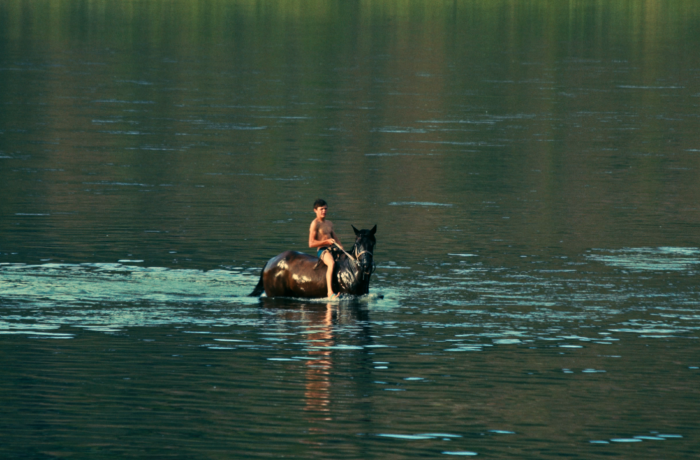
In another part of Ukraine, a conservative community finds the war challenging one of its most sacred nonviolent principles. Silent Flood by Dmytro Sukholytkyy‑Sobchuk, which premiered at IDFA in Amsterdam in autumn 2025, follows a closed pacifist religious group living by the Dnistro river. Their guiding rule: never take up arms. But what happens when survival itself – of the country and of the community – depends on the ability to fight back? How can they balance their beliefs with the urgent demands of war? Silent Flood becomes a slow yet tense exploration of how this community seeks protection: from the Russian invader on one side and from the erosion of their small world on the other. 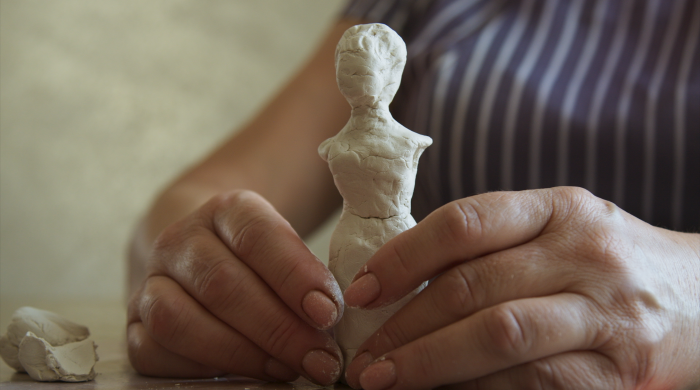
A still from the film Traces
Traces, co‑directed by Alisa Kovalenko and Marysia Nikitiuk and premiering at Berlinale 2026, follows a collective born from the conviction that justice and dignity must be fought for. Its protagonists are women of extraordinary courage who, after surviving sexual violence and torture during Russia’s aggression since 2014, refused to stay silent. Together, under the banner of SEMA Ukraine, led by activist and former captive Iryna Dovhan, they gather testimonies and evidence to expose Russian crimes. Their strength and inner light transform trauma into momentum – fuelling their work and building solidarity. 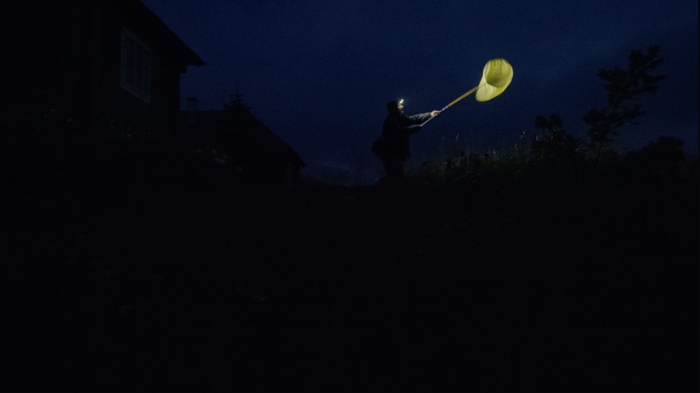
A still from the film The Illusion of a Quiet Night
Across Ukraine, scars and pain are being transformed into strength for daily resistance. For many cities, nightly Russian strikes have become a grim routine. In this reality, resistance often means carrying on with ordinary life. Olga Chernykh’s The Illusion of a Quiet Night, which had its world premiere in April at Visions du Réel in Switzerland, captures this collective act. Born of an experiment last summer, forty filmmakers and hundreds of volunteers filmed one July night in Ukraine. The resulting mosaic portrays the “banality” of war – the glue binding together grief, loss, destruction, and battles at the front. Explosions, sleepless nights, hiding in bathrooms, the loneliness of homes emptied by death; and then, with morning, the streets slowly awaken to another day.
Across Ukraine, scars and pain are being transformed into strength for daily resistance. For many cities, nightly Russian attacks have become a grim routine. In this reality, the act of defiance lies in carrying on with ordinary life. Awakening after the illusory quiet of night into a new day may be dismissed as an obvious hallmark of war, but it is what drives persistence and rage, turning trauma and fear into fuel for collective resistance. This very nature of resistance, I believe, pulses through all the films in this year’s national competition.
If you're unable to attend the Docudays UA screenings, the second screening in Ukraine of the films Traces, Silent Flood, and Illusion of a Quiet Night will take place at the Mykolaichuk OPEN festival in Chernivtsi, running from 13 to 20 June.
The choice to feature films by Ukrainian filmmakers and productions in the competition was made by the selection committee comprising of Darya Averchenko (Head of Communication Department), Roman Bondarchuk (Art Director), Yulia Kovalenko (Programme Director), and Olga Sydorushkina (Programme Curator).
Main photo: a still from the film Silent Flood
The 23rd Docudays UA is held with the financial support of the European Union and the Embassy of Sweden in Ukraine. The opinions, conclusions, or recommendations do not necessarily reflect the views of the European Union or the governments of these countries. Responsibility for the content of the publication lies exclusively with the authors and editors of the publication.