This year’s Docudays UA will open with Born To Fake (92 min) by Erec Bremer and Benjamin Rost. The choice of film and its connection to the festival’s main theme Simple Structures is commented on by Darya Averchenko, Director of the Communications Department and member of the Selection Council, as well as by the first Ukrainian viewers — media professionals who attended our press screening on 26 May.
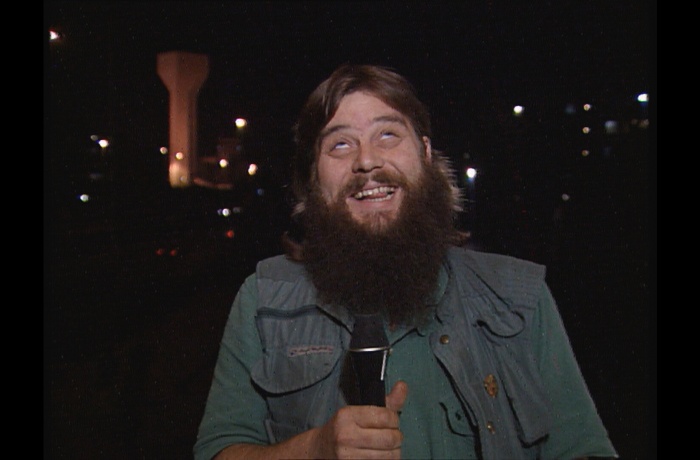
Main photo: a still from the film Born to Fake
The 23rd Docudays UA is held with the financial support of the European Union, the Embassy of Sweden in Ukraine, and the State Film Agency of Ukraine. The views, conclusions, or recommendations expressed do not necessarily reflect those of the European Union or the governments of these countries. The authors alone are responsible for the content of this publication.
“Each year, at the festival’s opening, we want to present an important and complex film that helps explain the state of affairs — globally or locally, at home. Yet after a difficult winter and spring, and amid satirical twists and examples of irresponsibility in international politics, our team agreed it was time for a humorous story of a small man that grew into a major scandal. This man worked in the news and invented certain details to meet the demands of TV editors. The story of Michael Born inspired German directors Erec Bremer and Benjamin Rost to investigate: was he simply an irresponsible journalist or a calculated provocateur? Why was he alone forced to bear responsibility? I will stop here, so as not to reveal too many spoilers. Come to the screenings and enjoy a simple yet powerful intellectual pleasure,”
shared Darya Averchenko.
“This film reminds us that trust cannot be taken for granted, and fact-checking should be the responsibility of everyone who shares information, not just institutions. For me, Born to Fake launches the 23rd Docudays UA with urgent questions: what is truth, who defines it, and who is accountable for it? I see it as a perfect prologue to the programme and an invitation for audiences to engage with the themes and debates offered by the festival this year,”
says Bogdana Korohod, independent writer.
“Born to Fake shows that in our rapidly changing world there is great danger in how easily we can deceive and be deceived. And in this lies the truth,”
remarked film blogger Maria Lataria.
“What I liked was being inside the world of this story — morally demanding, funny, and touching all at once. The film creates a field of discourse around truth, refusing to pin down its meaning and instead inviting you into ongoing inner debate. In that way, it becomes a conceptually anti-authoritarian narrative,”
commented Mariia Vasylieva, critic and festival programmer.
“This film is about responsibility — something we should never forget when covering events. I hope it reaches those who overlook the dangers of reckless AI use. Perhaps in future we will see similar revelations about those who manipulated reality through AI. While Born to Fake can be disturbing at moments, it also offers plenty of truly funny scenes,”
summed up Maria Kabatsii, journalist at Suspilne Kultura.