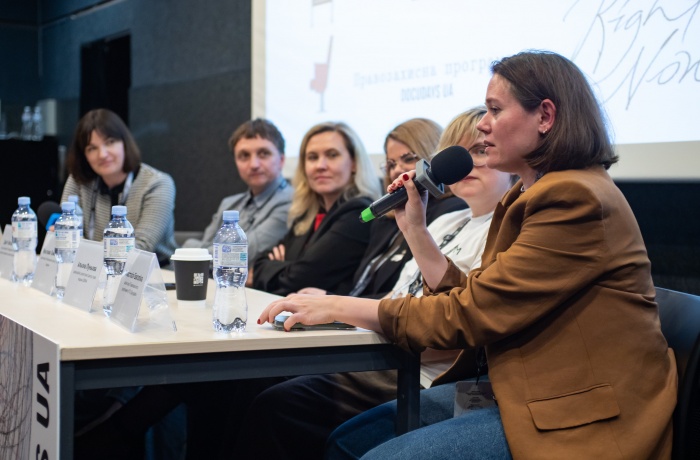
Why are we talking less and less about people on the other side of the frontline? How does life under occupation differ from our perceptions of it, and why are simplified approaches dangerous? Why do state policies often fail to keep up with the complexity of this experience? Where is the line between survival and collaboration, and how can we avoid losing what matters most — our citizens — in the effort to protect the state?
As part of a human rights discussion during the 23rd International Human Rights Documentary Film Festival Docudays UA, we launched the Being Present information campaign, dedicated to Ukrainians living in temporarily occupied territories (TOT), their rights, and their inclusion in the broader social context.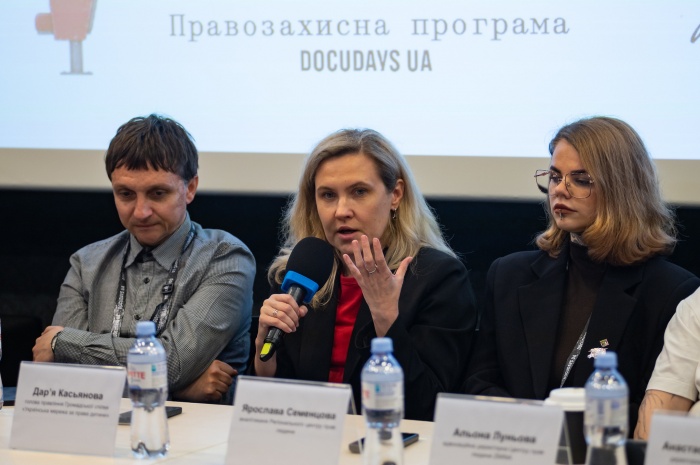
“We need to learn to respect this experience. Because when we start analysing why they didn’t leave… We’re seeing a similar situation now with forced evacuations, because there is a phenomenon of adapting to war. You remain in your own home and try to survive there. At the same time, what we see is that identity in the occupied territories is not lost. It exists. We can support it, we can help it grow. But most importantly, we must respect it and see the person within it,”
said Darya Kasyanova, Chair of the Board of the Ukrainian Child Rights Network.
Nearly one-fifth of Ukraine’s territory is currently under temporary occupation by the Russian Federation. But this is not just about square kilometres — it is about hundreds of thousands of people forced to live for years under systemic control, pressure, and isolation, under the threat of persecution, imprisonment, and violence. It is also about an entire generation of Ukrainian children raised in Russian propaganda.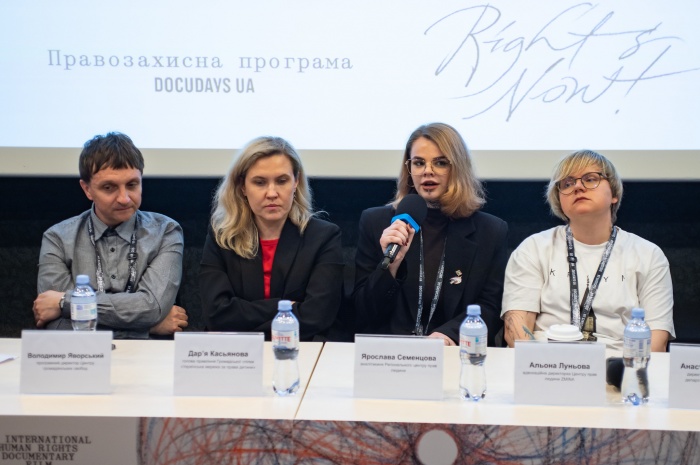
“Tomorrow marks three years since I moved to Kyiv. Three years ago, I left occupied Simferopol. And honestly, I am still reintegrating. I still cannot say that I fully feel like myself here. I do feel at home, and I am very glad — but this is still difficult.
There is a simplified document that suggests that during de-occupation people will somehow return to their previous state overnight. But that will not happen. First of all, the occupation has lasted for more than 12 years. There is already a whole generation that has never lived in Ukrainian Crimea, has never been in Ukraine. I can still rely on my memories, because I was 11. For younger people, Ukraine is an abstraction. And it seems to me that reintegration policies do not fully grasp the scale of the problem. People need to be shown that they are not just a territory that has been Ukrainian since 1991. They need to feel a sense of belonging, to see their future, to understand their place in history and culture,”
shared Yaroslava Sementsova, analyst at the Regional Centre for Human Rights.
We also see Ukrainian legislation, reintegration strategies, and the protection of people from occupied territories facing accusations of collaboration as key aspects of the discussion.
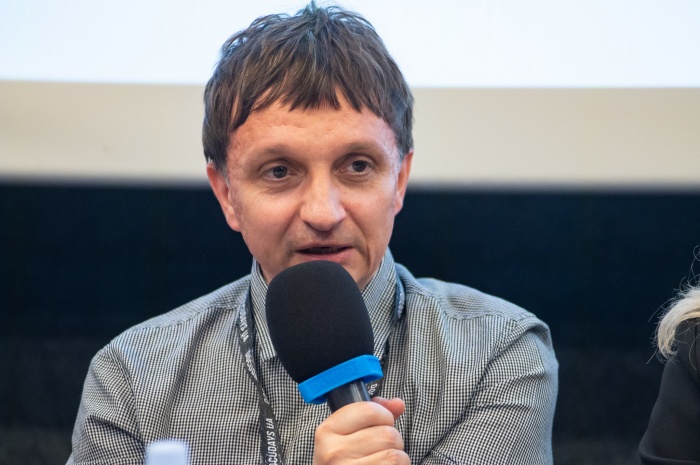
“Any payment of taxes to the Russian budget is automatically considered collaboration. You cannot live in occupied territory without paying taxes — otherwise you immediately face criminal charges. This is an objective reality that cannot be avoided. The state can build a fence and say this all is not ours, but then it faces another reality promoted by Russia. In my view, Ukraine must fight for those people who remain there and remain Ukrainian,”
said Volodymyr Yavorskyi, human rights defender and Programme Director at the Center for Civil Liberties.
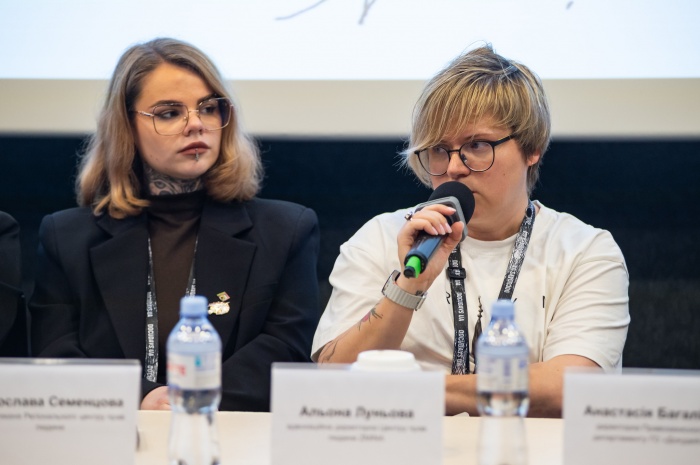
“And when we talk about what it means to leave occupied territory — how much it costs, what it looks like, how dangerous and risky it is… Before 2019, we recorded around 14.8 million crossings of the contact line and administrative border per year. Now there is no direct line of contact for crossing into the Russian Federation, which makes it extremely difficult. I think we need to talk about just how difficult it is. About real human stories — to humanise all this data,”
noted Aliona Luniova, Advocacy Director at the ZMINA Human Rights Centre.
They are Ukrainian citizens, and whether we listen to them, stand up for them, and defend their rights will shape the country’s future — its demographic, economic, and security capacity. This campaign aims to bring the issue of people living under occupation back into public discussion and make their experiences visible.
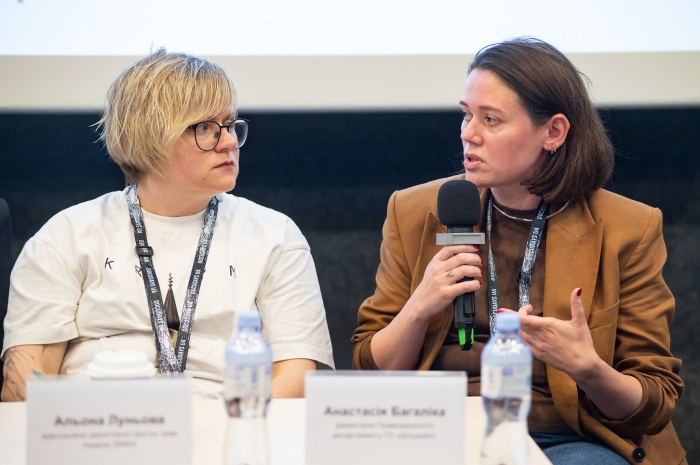
“This year, at Docudays NGO, we decided to launch this information campaign, which will later be continued by the Travelling Festival and our DOCU/CLUB Network. Thanks to this wide network and the tools of documentary cinema, we hope to engage more and more people in discussing an issue that is painful for so many. This is a request we constantly hear from people who attend our events and film clubs — they talk about it among themselves after screenings and discussions. Because even if you don’t have relatives in occupied territories and have never been there yourself, you still have friends, friends of friends, classmates — you are still connected in some way. Recognizing this need in society, we decided that we needed to speak out, and so this year we will also strive to amplify the voices of regional media outlets, with whom we will collaborate on this information campaign,”
announced Anastasiia Bahalika, journalist and Director of the Human Rights Department at Docudays NGO.
In July, we will announce a documentary film that will run alongside the campaign. Stay tuned for updates on docudays.ua and on social media.
Photos: Valeriia Landar
The campaign is implemented with the financial support of the Embassy of Sweden in Ukraine and the International Renaissance Foundation. The views, conclusions, and recommendations expressed do not necessarily reflect those of the governments, charitable organisations, or companies of these countries. The authors bear sole responsibility for the content of this publication.
Docudays NGO is a non-profit organisation implementing cultural and educational projects at the intersection of cinema and human rights in Ukraine and internationally. Its initiatives include the International Human Rights Documentary Film Festival Docudays UA and the Travelling Festival, the DOCU/CLUB Network of human rights film clubs, the RIGHTS NOW! human rights programme, the DOCUSPACE online cinema, the DOCU/PRO industry platform, the DOCU/CLASS documentary workshop, the interdisciplinary arts programme DOCU/SYNTHESIS, and the Ukraine War Archive, launched in partnership with the INFOSCOPE initiative.