Each year at Docudays UA, we screen and award films created by Lithuanian documentary makers or produced in collaboration between Ukraine and Lithuania. This year, we are delighted to present a special programme that reflects on and examines in detail the context of this country and its cinematic tradition. The selection has been curated by Eva Sinicaité, Programme Director of Inconvenient Films — the largest human rights documentary festival in Vilnius — who outlines which films are included and what makes them distinctive.
Lithuania has a remarkably strong documentary tradition, rooted in the legacy of the Baltic Poetic Documentary movement and carried forward by the first generation of filmmakers in independent Lithuania. Drawing inspiration from this cinematic heritage, they achieved what once seemed unimaginable — particularly for a small nation only beginning to rebuild itself after regaining independence. Filmmakers such as Audrius Stonys brought Lithuanian cinema international recognition when his short documentary Earth of the Blind (1992) received the European Film Academy’s Felix Award for Best Documentary. Likewise, Arūnas Matelis created what remains arguably the most internationally acclaimed Lithuanian film to date, Before Flying Back to the Earth (2005). The film was celebrated not only across Europe — winning prizes at IDFA, DOK Leipzig, and ZagrebDox — but also crossed the Atlantic, earning the Directors Guild of America Award for Outstanding Directorial Achievement in Documentary. 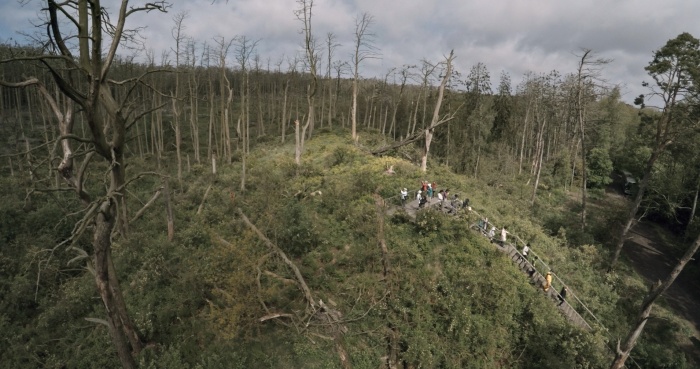
A still from the film Acid Forest
Although women remain underrepresented among directors in Lithuania overall, it is fair to say that today they stand at the forefront of contemporary Lithuanian documentary cinema. This programme seeks to highlight the strength, diversity, and originality of female voices within the field. Coming from backgrounds in theatre and visual arts, Rugilė Barzdžiukaitė, the director of the first film in our selection, created one of the most compelling observational documentaries of recent years, Acid Forest (2018). Through its portrayal of a dying forest inhabited by cormorants and overrun by tourists, the film offers a strikingly fresh perspective on human–animal relations, challenging deeply rooted anthropocentric ways of seeing the world. The work is both incisive and playful — qualities that also defined the opera Sun & Sea, created together with Vaiva Grainytė and Lina Lapelytė, which won the Golden Lion at the 2019 Venice Biennale.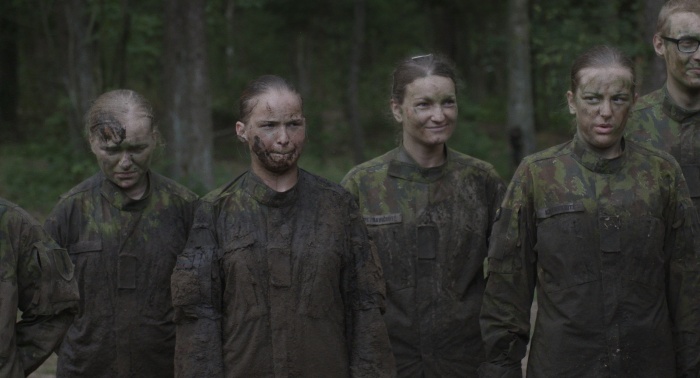
A still from the film Gentle Warriors
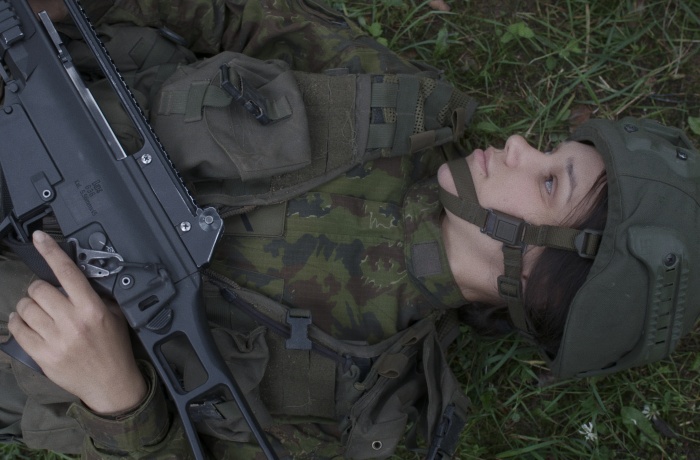
Marija Stonytė, who began her career directing short fiction films, gradually moved towards documentary filmmaking, bringing with her a quiet sensitivity and attentiveness to the world — whether focused on people, as in Mountains to Climb (2016), or butterflies, as in One Life (2019). Her debut feature documentary, Gentle Warriors (2019), follows three young women who volunteer to serve in an army created to defend the country against Russia within an overwhelmingly male military environment. The film demonstrates how an empathetic and patient gaze can reveal the inner lives of its protagonists, capturing the intimacy at the heart of documentary cinema. 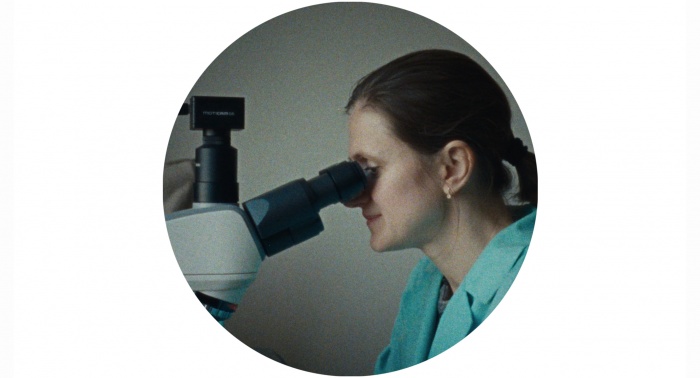
A still from the film Holy Destructors
The programme also features one of the most distinctive voices in Lithuanian cinema, Aistė Žegulytė, whose films emerge from extensive research and close observation. Her poetic approach and commitment to exploring themes of life and death — in both human and non‑human worlds — resulted in Animus Animalis (A Story About People, Animals and Things) (2018), which remains one of the most original Lithuanian documentaries in recent memory. In her latest work, Holy Destructors (2025), she takes an even bolder step, shifting her focus from animals to microfungi and moving deeper into reflections on mortality. The film’s impressive festival journey — including selections at IDFA, CPH:DOX, Tallinn Black Nights Film Festival, IndieLisboa International Independent Film Festival, and Vilnius Film Festival — further confirms the singularity of her artistic voice.
Alongside filmmakers such as Giedrė Žickytė, Lina Lužytė, and Giedrė Beinoriūtė, these directors demonstrate that Lithuania should celebrate not only its rich documentary tradition but, above all, the women who continue to shape, expand, and redefine it.
Main photo: a still from the film Gentle Warriors
The 23rd Docudays UA is held with the financial support of the European Union, the Embassy of Sweden in Ukraine, and the Ukrainian State Film Agency. The opinions, conclusions, or recommendations do not necessarily reflect the views of the European Union or the governments of these countries. Responsibility for the content of the publication lies exclusively with the authors and editors.