The key theme and concept of this year’s Docudays UA is Simple Structures. Read the curatorial essay by Yulia Kovalenko, Director of the Festival’s Programme Department, to discover the films and reflections that shape the thematic programme.
They say that what appears simple often proves difficult to reproduce or explain. The wingbeats that lift a bird into the air may seem like a straightforward principle, yet creating a mechanism with equal efficiency remains an extraordinary engineering challenge. Fire springs to life on our gas hobs with a mere turn of the ignition knob — but how easily could we kindle a flame ourselves without modern devices? And how would we secure drinking water without shops, vending machines, or filtration systems?
The winter of 2025–2026 became a test of creativity and resilience for Ukrainians across towns and villages. The deliberate Russian campaign of terror left many without light or heat, forcing people to recall or invent new (un)simple structures at home to stay warm and fed. Portable power units, tents pitched in living rooms to retain heat, camping gas stoves, cash reserves, and reflectors in the dark — all became indispensable hacks on the path to an (un)simple autonomous life.
Ultimately, the same applies to the subtler fabric of social order. Equality, for instance, is one of the fundamental principles of any democratic society. Outwardly, it is a simple structure, meant to guarantee that all citizens enjoy equal rights and obligations before the law, regardless of gender, wealth, religion, or ethnicity. Yet in practice, this foundational principle proves far from simple to implement and uphold. Another (un)simple value of a democratic society is freedom of speech. One of democracy’s key symbols and achievements, this structure begins to fragment into complex questions of balance between freedom and responsibility, legal boundaries, and the practical functioning of the media — for instance, how can freedom of speech be safeguarded from the abyss of populism?
In Ukraine, inventiveness is required not only in daily life but also in the wider social and political landscape. We are constantly called upon to imagine (un)new (un)simple structures, to trial them in our complex realities, and to reshape them for the work of building our democratic tomorrow. It may appear a daunting mission — but it is also our strength, our superpower.
In this year’s main thematic non-competition programme, Simple Structures, we have brought together five films that reveal five different (un)simple structures underpinning the idea of a democratic society — five stories of how these fundamental principles are implemented and realised, exposing their hidden complexity.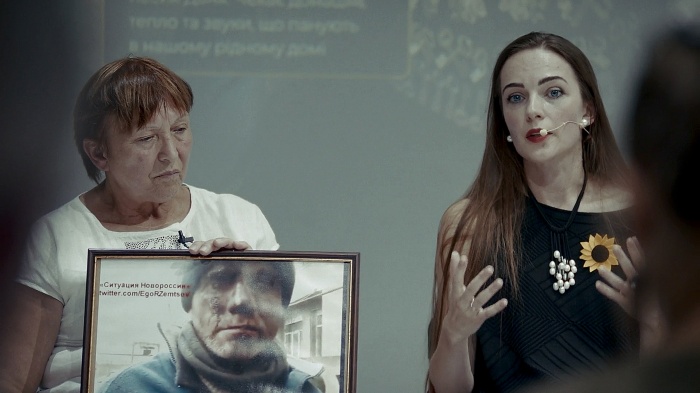
The rule of law and justice are among the fundamental pillars of democracy, making this system of governance, though not perfect, the most appealing and acceptable. Yet try to explain in simple words what they mean — in a way that even a child could understand. Is the rule of law always identical to justice? Can justice exist without the triumph of the courts? Jeanne Dovhych’s Peace for Nina is a cinematic journey spanning more than eight years, beginning with the pursuit of justice. Nina’s son, Ihor Branovytskyi — one of the last defenders of Donetsk Airport — was tortured and executed by Russian mercenaries in 2015 while in captivity. Over the years, she has sought justice, gathering evidence about the perpetrators and demanding accountability. For years, Nina sought justice, gathering information about the killers and demanding accountability. Step by step, this arduous journey became intertwined with the process of living through grief, building and strengthening the memory of her son, and healing through maternal love. Neither the protagonist nor the director offers a loud, universal answer to difficult questions such as “What is justice?” or “Does it equal the rule of law?” Instead, the film captures how one person can piece together a shattered world and construct resilient structures to withstand the darkest violence. 
Similarly, the protagonist of The Last Ambassador (dir. Natalie Halla) reconstructs and reimagines, on a personal level, the seemingly simple structure of people’s power. Manizha Bakhtari served for many years as a diplomat, representing Afghanistan’s interests in Vienna when the Taliban seized power in Kabul. Since then, she has faced a difficult question — both moral and practical: is she still the ambassador of her country? The government she represented has been overthrown, and she is a woman whose rights the Taliban movement so brutally and routinely violates. By daring to challenge the regime now ruling her country, Manizha Bakhtari must literally reconstruct her work, from securing funding for the embassy to taking significant political steps in defence of women’s rights in Afghanistan. The film records countless invisible tasks and decisions that fall on the ambassador’s shoulders — seemingly routine at first glance, yet together forming a desperate struggle for her people’s rights. 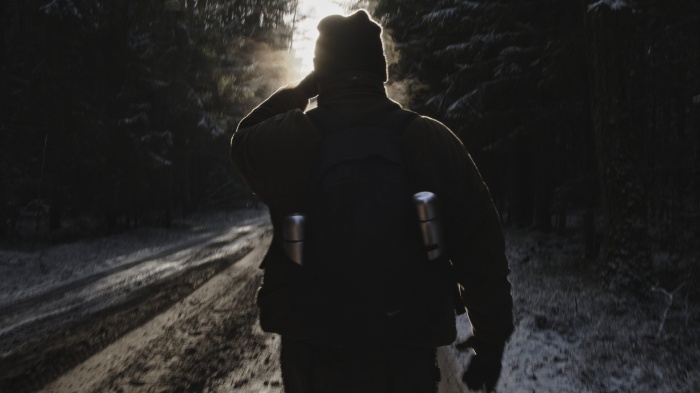
Another film in this selection reflects on the personal dimension of democracy’s core principles. The Guest by Zvika Gregory Portnoy, Zuzanna Solakiewicz — which also marks our long-standing film exchange with the Krakow Film Festival — documents events on the Belarusian border in 2021. At that time, Lukashenko’s regime engineered a crisis, pushing a group of refugees to cross illegally and seek asylum in Poland. A situation that could easily resemble the opening of a gripping thriller: a weary stranger appears at your doorstep, speaking broken English, asking for shelter, while armed border guards search for him outside. Yet this film does not seek sensationalism or exploit human fate. The Guest becomes a quiet, warm observation of a trial of what seems a simple, fundamental concept of coexistence in a democratic society: empathy. Compassion, of course, must not be confused with naivety — but neither can it remain a mere word. It requires action and everyday political choices within private life. 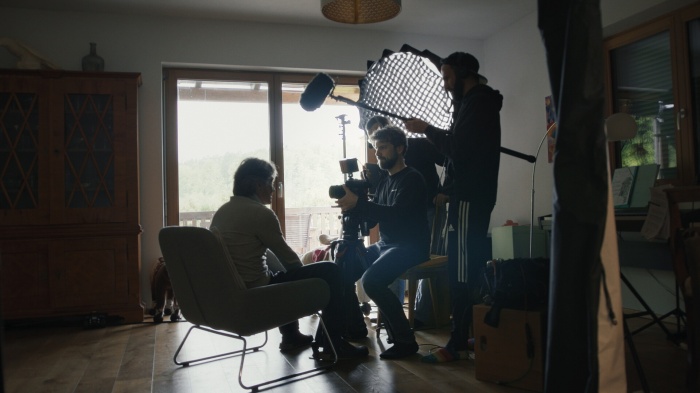
The protagonists of Born To Fake (dir. Erec Brehmer, Benjamin Rost) also reflect on personal responsibility — this time in the context of democracy’s (un)simple value of freedom of speech. Have you ever heard of LSD frogs? The legend claimed that licking these amphibians could induce hallucinations, a myth once widely spread through street culture. The film’s central figure, Michael Born, played a major role in popularising this and many other dubious rumours. Working as a German TV journalist in the 1990s, Born produced sensational reports for leading local channels — fabricating, of course, the material and information. At times, Born’s work bordered on fiction filmmaking — if only it had not been produced within the media. Myths about drug addicts licking LSD frogs or a Ku Klux Klan enclave in rural Germany echoed for years across news broadcasts, generating considerable profit for Born, his colleagues, and the networks. However absurd or even punkishly comic his fabrications appeared, the inflated bubble of pseudo-journalism was bound to burst, painfully exposing the difficult questions surrounding freedom of speech: what mechanisms can a democratic society rely on to restrain lies and populism? Do journalists and editors share equal responsibility for the truthfulness of information? How must an editorial office balance between ratings and shaping a socially significant agenda? And finally, are those colleagues who knew and concealed the fabrications of a charismatic forger complicit in the abuse of freedom of speech?