Explore the Deconstructions line-up of films and events in the curatorial essay by Yulia Kovalenko, Programme Director at Docudays UA.
On the 23rd Docudays UA, with the financial support of the European Union, we are launching FILMDECO — a multi‑year project carried out in collaboration with two European film festivals — One World (Slovakia) and Verzió (Hungary). The project seeks to critically reflect on the legacy of colonial policies in Central and Eastern Europe.
I must admit, I grew up convinced that colonialism in Ukraine was long gone, confined to the history books of the 15th to 19th centuries. My schooling in Odesa in the 1990s and 2000s barely mentioned the idea of ‘colonised Ukraine’; instead, we spoke of our people’s oppression. Colonisation was something that happened far away — in Africa or South America. And with independence in 1991, it seemed that the burdens of oppression had been left behind: we had turned the page and could live freely, while the real and often unspoken consequences of colonisation faded into collective amnesia. That’s why, back in 2007, a monument to Catherine II (officially titled Monument to the Founders of Odesa) was erected in the very centre of my home city, Odesa, I simply lacked the language as a student to articulate what felt inappropriate about the situation and why. Now, almost twenty years on — twelve of which our country has been fighting for its independence in the skies and on the battlefield — the re‑examination of the colonial past and the practice of decolonisation has become an essential part of Ukrainian reality.
As a result of our reflections within this project, this year’s Docudays UA presents the special programme Deconstructions, dedicated to decolonial practices and perspectives. Through documentary cinema and public events, we aim to create a safe cultural space for dialogue and practices that challenge colonial influence and dismantle imperial narratives. The programme brings together a series of events within the DOCU/CLASS and RIGHTS NOW! sections, as well as a curated selection of films. 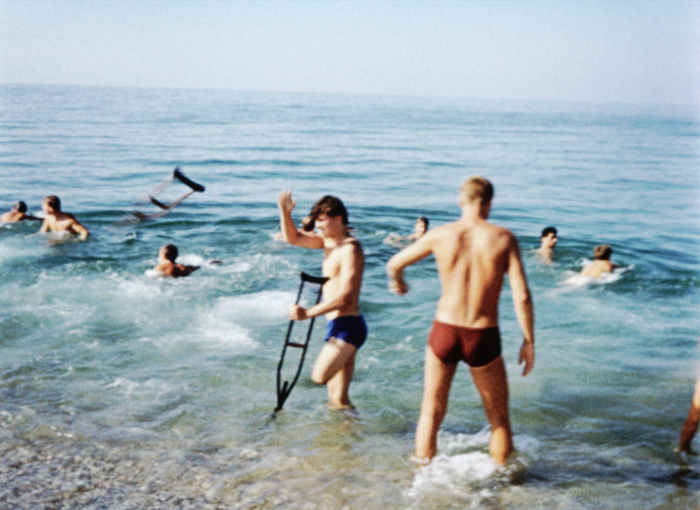
A still from the film Wound
When speaking of decolonisation in cinema, one cannot ignore the need to rethink and re‑contextualise local filmmaking. It means giving voice to those forced into silence, restoring meaning to their works, and exposing the hidden weight of ideology. Most importantly, it means returning national films to the screen. In this regard, the digitisation and public presentation of Ukraine’s film heritage stands as one of the most powerful decolonial practices. Together with the Dovzhenko Centre, we will showcase digitised documentary films created by Ukrainian directors in the late 1980s and early 1990s. Curated by film scholar Alona Penzii, this collection of five short works captures the twilight of a collapsing empire, through whose fissures emerged pressing questions for Ukrainian society. A yearning for freedom of speech, a demand to reckon with traumatic history, a call to restore human dignity, and a profound mistrust of the state shaped by decades of totalitarian rule — these concise narratives weave a textured picture of the society that ultimately broke free from imperial chains. 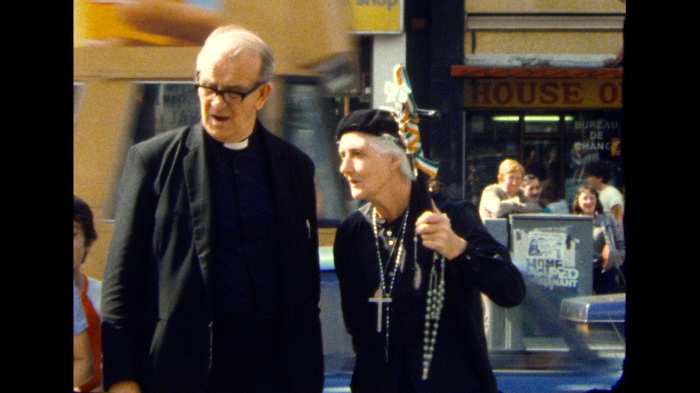
Another work in the programme mirrors the condition of a society marked by prolonged colonial rule — in this case, Ireland, the first English colony. Dennis Harvey and Lars Lovén’s Celtic Utopia takes us to the opposite edge of Europe, yet the challenges it portrays resonate deeply with our own. The language question is central: after centuries of imperial domination, Irish has fared even worse than Ukrainian, and its revival has become a matter of cultural survival. The film’s protagonists — local artists — dedicate themselves to this meticulous decolonial labour. Still, the Irish spirit endures, accompanied by a wry humour that at times recalls the flavour of Ukrainian memes. 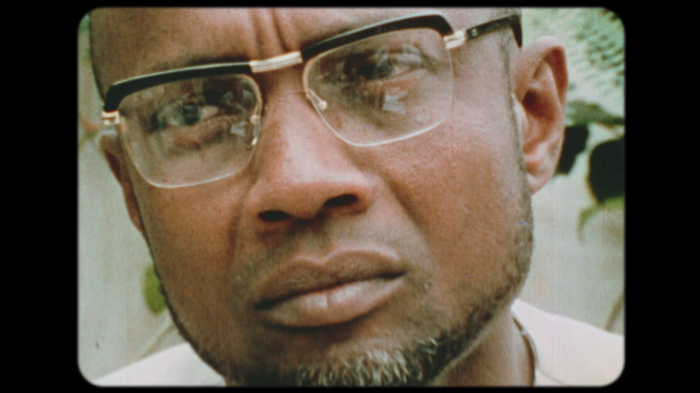
Decolonisation demands a broad spectrum of action — extending beyond culture into politics and economics. At times, resistance to the empire must be fought on the battlefield. To endure, the anti‑imperialist liberation movement needs strategic foresight, ensuring that its strength and fervour are not dissipated on hollow aims, for this journey is a marathon rather than a sprint. One of the films in Deconstructions captures this path through the story of a figure who united theoretical thinking on decolonisation with tangible steps and decisions. Miguel Eek’s Amílcar offers a poetic portrait of a leader of the national liberation struggle against Portuguese colonial rule in Guinea‑Bissau and Cape Verde. Amílcar Cabral is often described as one of the key revolutionary theorists of decolonisation — alongside Frantz Fanon. Examining imperial domination and colonisation within the broader framework of a capitalist world ruled by monopolies, Cabral insisted that true independence from the coloniser could only be achieved through control over the means of production. By carefully studying archival materials and Cabral’s own recordings, the Spanish director creates a vivid, multi‑layered portrait of a man who pursued the dream of independence with unwavering dedication, balancing between theoretical utopias and direct action on the battlefield. 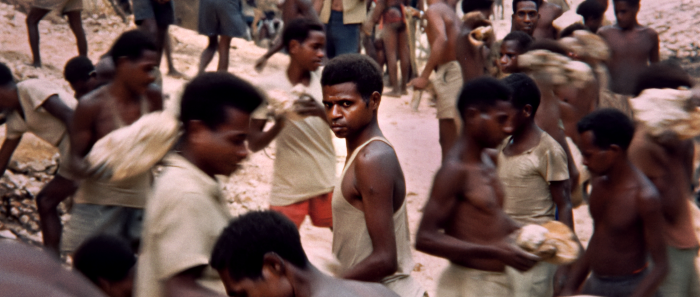
The fourth cinematic strand of Deconstructions turns a wide‑angle lens on a story of decolonial struggle that, frame by frame, expands into a narrative of global influence, geopolitical manoeuvres, and ultimately the catastrophe of indifference. The Promise, by Dutch director Daan Veldhuizen, uses eloquent archival footage to transport us to the mid‑twentieth century — a time when Indonesia had already secured independence, while the western part of New Guinea was still on its path towards sovereignty from the Netherlands. West New Guinea was promised freedom within a few years, with commitments to nurture political leadership, bolster the economy, and expand education to prepare the colony for independence. That promise, however, was never realised. Through the ideological battlegrounds of the mid‑twentieth century — in which, inevitably, the Kremlin played its part — the director traces a chain reaction that stretches from a provincial decision to global geopolitical struggles, where yesterday’s colonised became today’s colonisers. The broken promise has left behind a human tragedy, still unfolding in West New Guinea, while the world largely looks on in silence. Among all the films in the Deconstructions programme, this one perhaps speaks most clearly to the fact that resisting imperial domination and adopting a decolonial lens also requires finding one’s place within the global architecture of the world — and, at times, this search means reshaping large, often outdated structures to meet the demands of a new era.
Main photo: a still from the film Amílcar