Read more about the Her Lens: Ukrainian Focus and Her Lens: British Focus selections of the DOCU/SYNTHESIS–2026 programme in the curatorial text by Oleksandra Nabieva.
The core of this year’s interdisciplinary arts program DOCU/SYNTHESIS adopts an intersectional feminist focus and consists of two moving image selections — Ukrainian and British. Each amplifies women’s voices, narratives, and representations, challenging gender stereotypes in its own way and resisting established, dominant regimes of visibility and remembrance. The program invites to reflect on and to bridge gaps in representation, and probing its limits.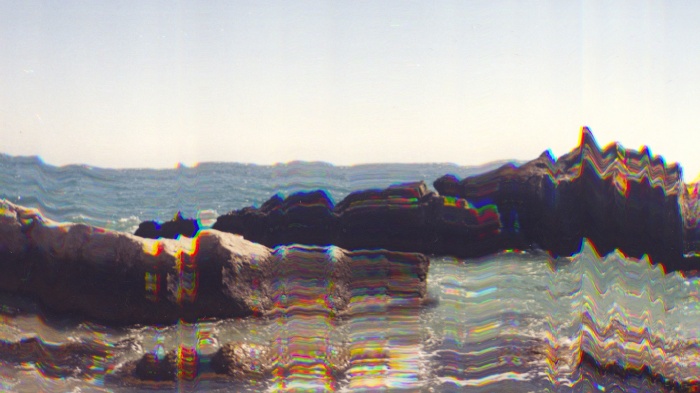
A still from Message in the Bottle
Opening the Her Lens: Ukrainian Focus selection is Kateryna Ruzhyna’s Message in the Bottle (2025), a work at the intersection of video art and documentary essay that assembles a collective history through the personal memories and archives of its female protagonists. The landscape — a riverbank, a seashore — emerges here as a “site of memory,” while its reconstruction in narrative becomes a form of presence and an assertion of identity. We speak of the traumatic, of loss, therapeutically addressing ourselves through such acts of expression. These voices merge into a continuous stream of testimony to our loss, forming a contemporary variation of oral history. The glitch in the image, as a conceptual device, echoes the play of sunlight on the surface of water on one of those hot summer days of seemingly endless childhood time.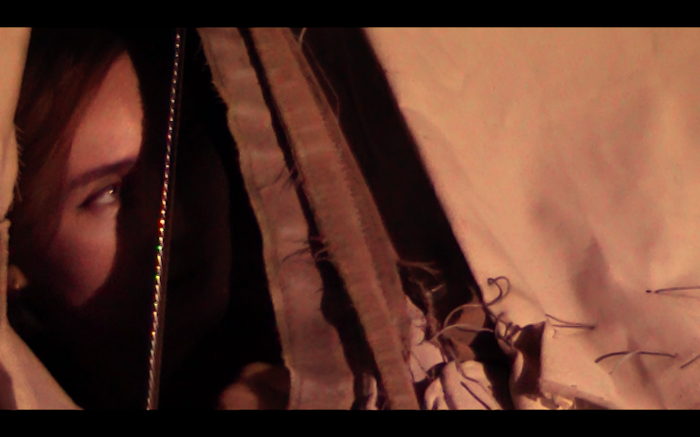
A still from Scales
Reflections on water and childhood memories also open Anna Shcherbyna’s film Scales (2024) — a surreal inner journey. In 2025, the work received one of the e-flux Film Award distinctions, granted to films of artists who expand the aesthetic and critical potential of the moving image in an era of global information circulation. The nonlinear narrative of Scales is structured around an understanding of how memory works and how recollections are constructed. The film serves both as a reconstruction of memories — and of one’s own sexuality through them — and as a meta-commentary on their strange, collage-like, and citational nature. Even personal experience, seemingly the most reliable point of reference, turns out to be a complex layering of self-imaginings, cinematic topoi, screen images from B-movies, representations of female sexuality, and the objectification of the female body within them. The phantasmatic and the traumatic intertwine in recollection, forming a loop (where nonlinearity becomes cyclicality) that draws one in. Scales rolls in waves, mesmerizing with its boldness in speaking about pleasure as a form of resistance and its connection to trauma.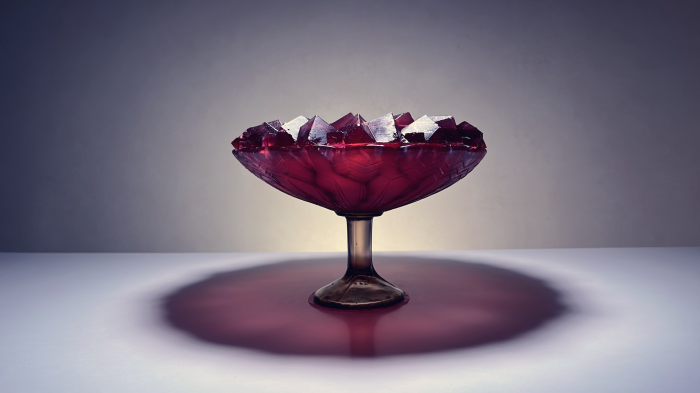
A still from Broken Glass
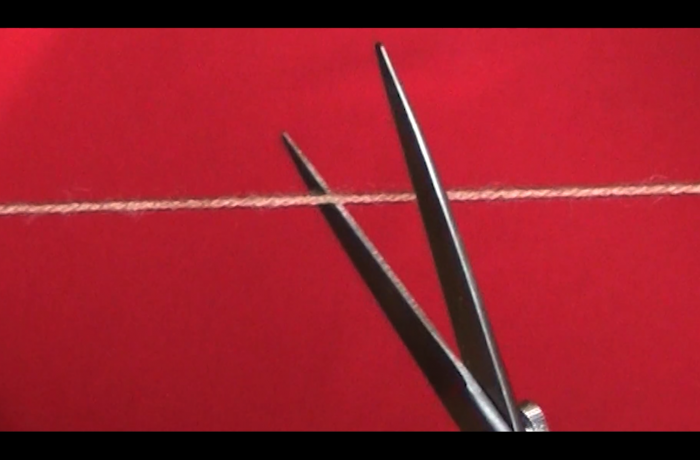
A political analysis of everyday life and invisible women’s labor in Kateryna Voznytsia’s animated film Broken Glass (2026) can be enough for, without exaggeration, a feminist manifesto for 2026. In this sense, the work continues the trajectory of Chantal Akerman (Saute ma ville, 1968; Jeanne Dielman, 23 quai du Commerce, 1080 Bruxelles, 1975) and Martha Rosler’s video art (Semiotics of the Kitchen, 1972). The director reflects on reproductive and artistic labor, incorporating a key topos of feminist art and its subversive potential.
An act of creation that patriarchal legacy persistently seeks to separate from the physical and the bodily. An act of birth that has been mystified and sacralized in dominant culture seemingly for a single purpose: to detach the emergence of a human being from the physical act of giving birth, from the wound of maternal corporeality — paradoxically, perhaps the most unknowable mystery. Close, pulsating, purple — infinitely distant, immeasurable, a cosmogonic force.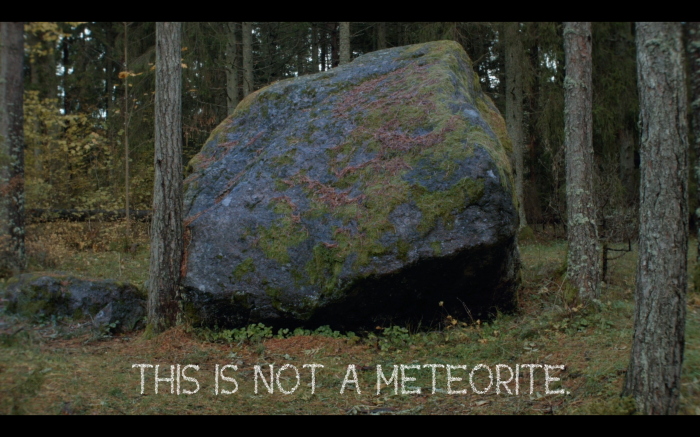
A still from I Am a Rock
I Am a Rock (2024) expands the discussion of the (un)represented to a planetary and cosmic scale. Teta Tsybulnyk’s film proposes reflecting on experiences of otherness and forms of memory that exist beyond human temporal, spatial, and sensory coordinates. It addresses the subjectivity of nonhuman agents and the fluid boundaries between the animate and inanimate. At the same time, the most pronounced emphasis in the work lies in shifts and ruptures within symbolic systems and their limitations in matters of representation.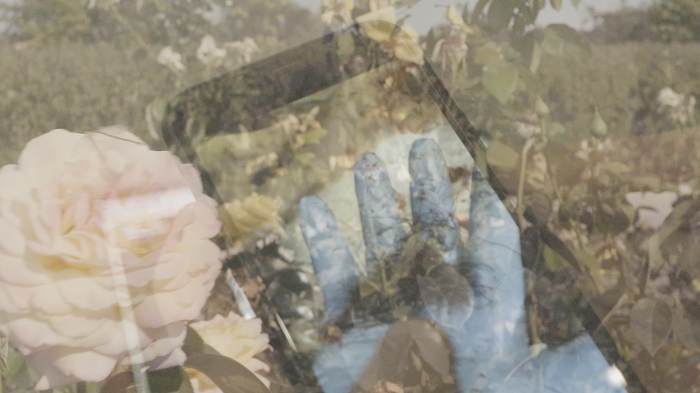
A still from And Where Now?
Drawing on her experience as a fixer for international media, Svitlana Dovbush unfolds a critical reflection on the limits of documentary and media representation. Her media work And Where Now? (2025) interprets wartime reality as an experience of radical rupture that resists any form of representation and calls its very possibility into question. Repetitions, breaks, temporal displacements, and work with the audiovisual medium most precisely capture both the representation of trauma and the impossibility of representing it — human and nonhuman alike.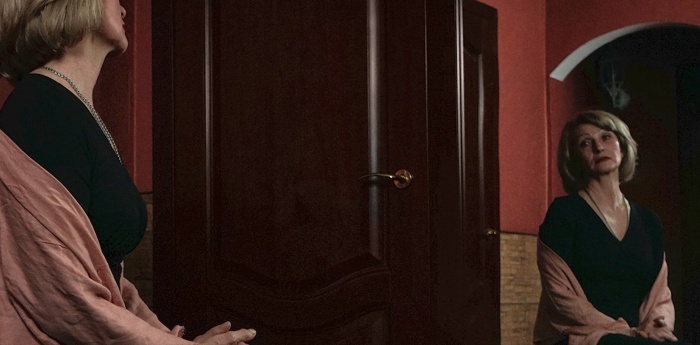
A still from Pietà
Pietà (2025) by director Olena Hrom is the work closest to the form of a documentary film within the program, yet the author’s photographic background defines it on formal, conceptual, and narrative levels. The work is built around a transition from still to moving image, from portrait-like stasis to cinematic duration. Drawing on the iconography of the pietà and the sculptural gesture of suspension, it captures loss as a state in which time disappears. Yet at the climax, the digital image begins to disintegrate: pixels melt and crumble, revealing their own materiality and once again reminding us of the impossibility of representation. The memory of a son and the love for him restore movement where only a monument of loss and frozen grief seemed to remain. Thus maternal love emerges as a form of resistance, a force opposing immobilization, oblivion, and death.
The British part of the program, Her Lens: British Focus, continues the conversation on issues of representation, power asymmetries, traumatic experience, visibility, and resistance to hegemonies.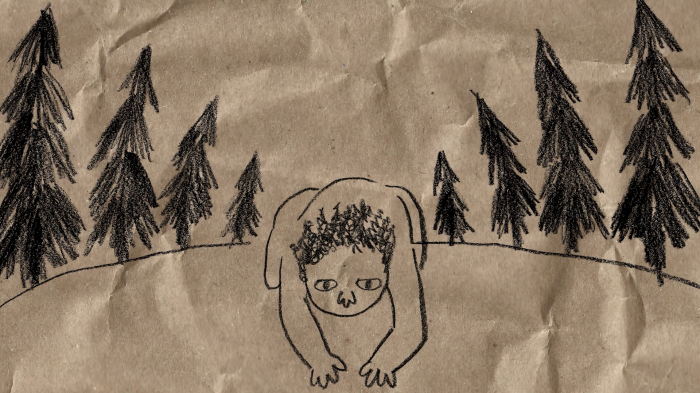
A still from His Lens
Jess Stevens’s animated work His Lens (2026) uses fragile tools — pastel and paper — to speak about a misogynistic optic that, according to the director, still shapes the face of the film industry. The work was created within FLAMIN (Film London Artists’ Moving Image Network) Animations, a program for emerging moving image practitioners from Black and other ethnically diverse communities in the UK. Jess herself states that she uses animation to fill gaps in representation and to tell the story of migration from Barbados to the UK and life in the diaspora.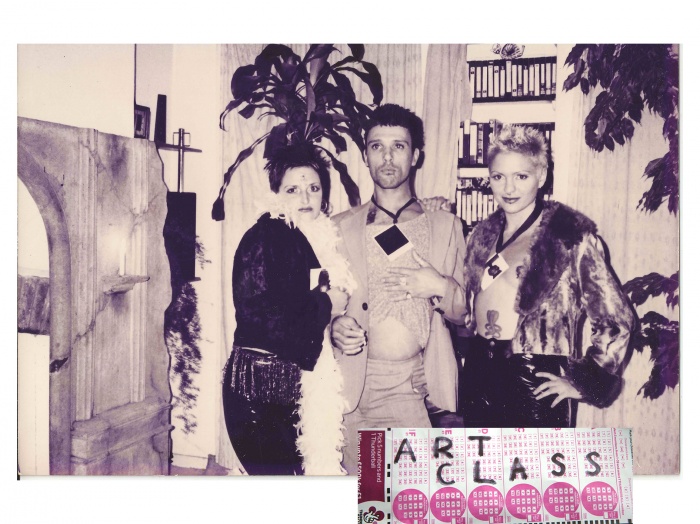
A still from Art Class
In the documentation of their performative lecture Art Class (2020), filmmaker and lecturer at the University of the Arts London Andrea Luka Zimmerman explores class divides in access to cultural production and self-representation. Both satirical and serious, playing with a full range of tonalities and forms, the film ultimately breaks the fourth wall, offering a shared therapeutic session as an act of resistance to political and cultural hegemonies.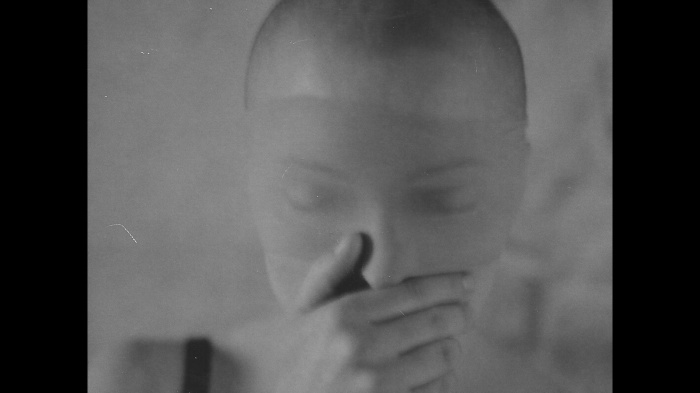
A still from While the Gods Were Busy with Another Child
Zimmerman’s new film While the Gods Were Busy with Another Child (2026) continues the inward exploration. However, self-exploration here transitions into social analysis, focusing on working-class experience and ways of representing trauma — both personal and intergenerational. In the essayistic form of the film, constructed from personal and public archives, memory again appears as a collage, here combining various media — photographs, 16mm film, VHS recordings, interviews, and diary fragments. Ultimately, the work also articulates a gesture of resistance to circumstances.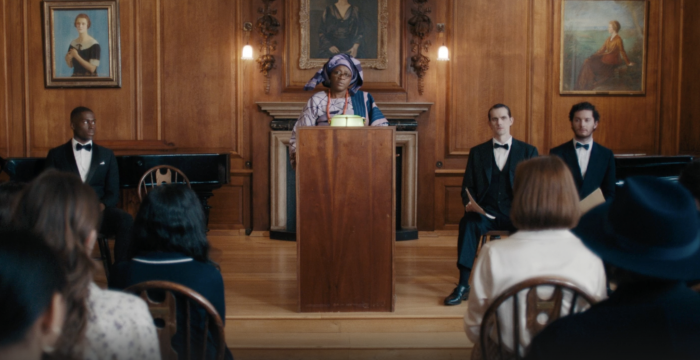
A still from A Radical Duet
Artist and PhD researcher at the University of the Arts London Onyeka Igwe emphasizes sensory, spatial, and anti-hegemonic modes of learning in her work. As she defines it, her practice seeks to restore visibility to the prosaic, everyday aspects of Black communities’ lives through the body, archives, and oral narratives. A Radical Duet (2023) reconstructs London in 1947 as a center of anti-colonial intellectual and artistic activity. It offers a decolonial perspective on history, reinforced by its very form, which reveals the structure of the narrative and the process of its making. The work challenges colonial regimes of visibility by combining reconstruction with documentation.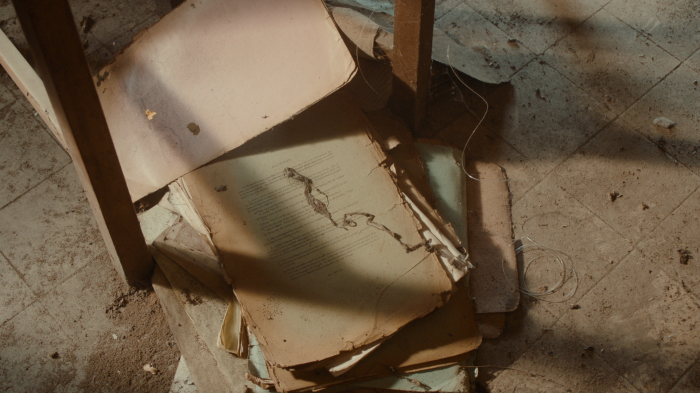
A still from In No Archive Can Restore You
From personal to collective memory: Onyeka Igwe also explores the spatial configuration of a colonial archive in the center of Lagos. In No Archive Can Restore You (2020), the artist creates a material visualization of the archive’s historical role as a colonial apparatus — a tool that organized, classified, fixed, and controlled representations. Here, it is not merely a divide but a literal abyss of representation and memory — one that, as the artist notes, not everyone dares to look into. The soundscapes of “lost” films within the space of a decaying machine of British visual propaganda create a physically palpable, electric tension that leaves no sense that danger has passed.
The program was prepared in collaboration with FLAMIN (Film London Artists' Moving Image Network).
We thank LUX for their support in preparing the program.
The DOCU/SYNTHESIS program is supported by the British Council’s grant program “UK→Ukraine: Culture Sync.”
Main photo: a still from Scales
The 23rd Docudays UA is held with the financial support of the European Union, the Embassy of Sweden in Ukraine, and the State Film Agency of Ukraine. The views, conclusions, or recommendations expressed do not necessarily reflect those of the European Union or the governments of these countries. Responsibility for the content of the publication lies solely with its authors.